
World Cup 2026 Family Data Plan: 4 Phones Connected for Under $60
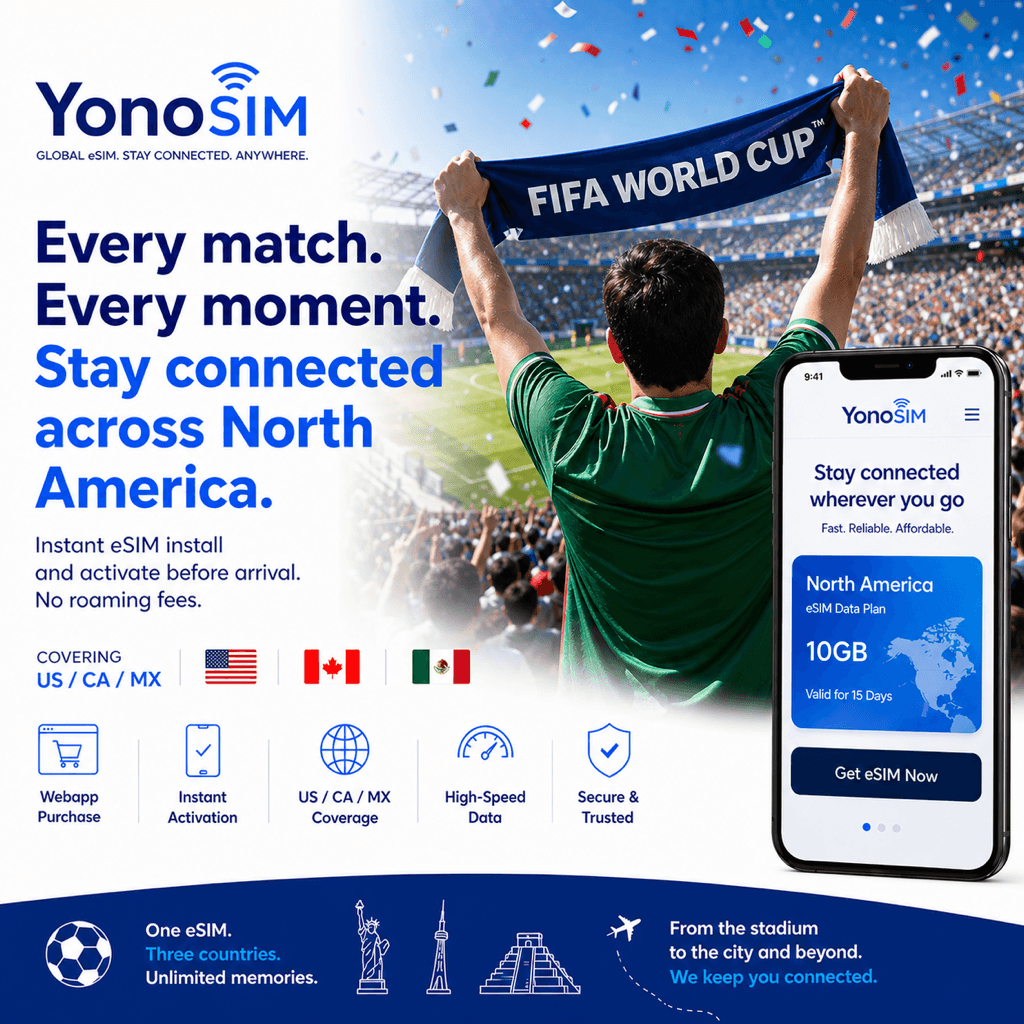
Bringing the family to World Cup 2026? Put one eSIM on each phone — 4 devices on 10 GB plans (~US$15 each) runs under US$60 total. No shared-hotspot battery drain, everyone keeps their own data through the July 19 final.
Published July 4, 2026·6 min read
Summary
A family of four can stay fully connected across World Cup 2026 for under US$60 total— put one eSIM on each phone (4 devices × ~US$15 for 10 GB), install every profile at home, and skip the shared-hotspot battery drain. Everyone keeps their own data through the final at MetLife Stadium on July 19, 2026.
Why one eSIM per phone beats hotspotting everyone
The instinct for a group trip is to buy one big plan and hotspot the family off a single phone. It rarely holds up on a World Cup match day. Tethering hammers the host phone's battery just when you need it for tickets and photos, the hotspot only reaches people within Wi-Fi range — so nobody can split off to the concession stand or a different gate — and if that one phone dies, the whole group goes dark.
Giving each device its own eSIM fixes all three. Every family member gets their own maps, ride-hailing, and FIFA app without leaning on anyone else. One important caveat: an eSIM is a single profile tied to one phone, so devices cannot share a profile — each phone needs its own eSIM. You install them all at home on Wi-Fi the night before you fly.
Sizing a plan for each family member
You do not need identical plans. Adults doing maps, streaming replays, and social uploads want ~10 GB; kids who mostly need messaging and shared location can take a much smaller plan. Budget roughly 1–1.5 GB per match day.
| Family member | Data | Typical price | Best for |
|---|---|---|---|
| Kid | 3 GB | US$3–8 | Maps + messaging + location |
| Adult | 10 GB | US$15 | FIFA app, ride-hailing, uploads |
| Heavy streamer | Unlimited | US$20–30 | Streaming matches, tethering a laptop |
The math on a classic family of four: two adults on 10 GB (~US$15 each) plus two kids on smaller plans lands the whole group under US$60 totalfor a knockout-stage trip. Every plan sits in the US$3–30 range, so you are never near a roaming bill.
eSIM vs roaming vs pocket Wi-Fi
| Option | Cost (family of 4) | Setup time | Coverage |
|---|---|---|---|
| eSIM (one per phone) | Low (under US$60) | ~5 min each (pre-install on Wi-Fi) | Excellent, each device independent |
| Carrier roaming | High (US$10–15/day × 4) | Instant (already enabled) | Medium (partner-dependent) |
| Pocket Wi-Fi (shared) | Medium (rental + deposit) | Airport pickup / rental | Group tied to one device to charge |
Travel eSIMs ride the big US networks — T-Mobileand AT&T — so the underlying coverage across the North American host cities is comparable to a local SIM. The difference is that each family member is on their own profile, install happens at home, and there is no shared battery to babysit.
FAQ
QCan multiple phones share one eSIM?
ANo — an eSIM is a single profile tied to one device, so each phone needs its own eSIM. The good news is you install every profile at home on Wi-Fi before you fly, and each family member keeps their own data allowance instead of fighting over a shared hotspot.
QHow much does it cost to connect a family of four for the World Cup?
ARoughly under US$60. Four phones on 10 GB North America plans at about US$15 each comes to around US$56–60 total, covering a knockout-stage trip through the July 19, 2026 final. Kids who only need maps and messaging can take a smaller US$3–8 plan to trim the total further.
QIs one person hotspotting everyone cheaper than an eSIM per phone?
AIt looks cheaper but rarely wins. Hotspotting drains the host phone's battery fast on a match day, only works within Wi-Fi range so nobody can wander off, and one dead phone knocks the whole group offline. Separate eSIMs at US$3–30 each keep everyone independent and connected all day.
QDo we have to install the eSIMs before we leave home?
AYes, and it is easier that way. Install each device's eSIM on home Wi-Fi a day before departure using Apple Pay, Google Pay, or a card; the profiles auto-activate when you land in the US, Canada, or Mexico. No store visits and no roaming charges.
Bottom line
For a family chasing the knockouts, one eSIM per phone is the clear win: install every device at home, land with data already on across the US, Canada, and Mexico, and keep the group under US$60 total. Size adults at 10 GB, kids smaller, and reserve unlimited for the streamer who wants the July 19 final on their own screen. See the full lineup on YonoSIM's North America plans.