
Korea Travel Guide 2026: Visas, K-ETA, T-money, Naver Map, Taxis, Rentals & Phrases
The one Korea travel guide that actually shows you why Google Maps won't give you walking directions (and which app to use instead), whether you need K-ETA, how T-money works on the bus, how to hail a taxi with Kakao T, and the Korean phrases that make the trip smoother.

Published July 27, 2026·21 min read
30-day auto-refund on no usageSummary
A deep-dive Korea travel guide for 2026 — the one that explains why Google Maps can't give you walking directions in Seoul (and which app to install instead), whether you need K-ETA in 2026 (dated exemption table), how T-money works when you tap on and off a bus, how to hail a taxi with Kakao T in English, whether you can rent a car on your home licence, and the Korean phrases that quietly upgrade the whole trip. Cross-checked against Korea's MOFA visa portal, K-ETA, and Seoul Metropolitan Government.
Do you need a visa? (dated, by country)
South Korea runs a bilateral visa-exemption arrangement with roughly 110 countries and regions for short-term tourism and business. The list is maintained by the Korean Ministry of Foreign Affairs and is updated periodically — the max-stay length varies by treaty. If your passport is on the list, you get a “temporary visitor” stamp on arrival with no advance visa application. You do need a passport valid for the length of your stay, and you may be asked to show onward travel and enough funds.
| Nationality | Visa needed? | Max stay | Notes |
|---|---|---|---|
| 🇨🇦 Canada | No | 6 months | One of the longest visa-free stays — treaty allowance |
| 🇺🇸 United States | No | 90 days | Visa-free tourism / business |
| 🇬🇧 United Kingdom | No | 90 days | Extendable up to 6 months under Korea-UK bilateral treaty |
| 🇦🇺 Australia | No | 90 days | Visa-free tourism / business |
| 🇳🇿 New Zealand | No | 90 days | Visa-free tourism / business |
| 🇩🇪 Germany | No | 90 days | All Schengen visa-exempt countries treated the same |
| 🇫🇷 France | No | 90 days | Visa-free tourism / business |
| 🇯🇵 Japan | No | 90 days | Visa-free (reinstated 2022) |
| 🇸🇬 Singapore | No | 90 days | Visa-free tourism / business |
| 🇭🇰 Hong Kong (SAR) | No | 90 days | HKSAR / BN(O) passports |
| 🇹🇼 Taiwan | No | 90 days | Ordinary passport with national ID number |
| 🇨🇳 China (PRC) | Yes | n/a | Apply in advance; Jeju Island transit-visa-free program applies separately |
| 🇮🇳 India | Yes | n/a | Apply at a Korean embassy / consulate before travel |
| 🇵🇭 Philippines | Yes | n/a | Apply at a Korean embassy / consulate before travel |
Source: Korean Ministry of Foreign Affairs. Verify your specific passport at mofa.go.kr before you book.
K-ETA: what it is, and whether you need it in 2026
Korea runs an electronic travel authorization system called K-ETA (Korea Electronic Travel Authorization), launched in September 2021. In principle, every citizen of a visa-exempt country needs to apply for K-ETA online at least 72 hours before boarding a Korea-bound flight, pay a small fee (~10,000 won / US$2-8), and be approved before departure. In practice, however, Korea has waived the K-ETA requirement for a rotating list of 22 “major partner” nationalities since 2023 to boost inbound tourism, and this temporary exemption has been extended year-by-year.
The most recent extension was announced by K-ETA on March 20, 2026 (“대한민국 전자여행허가제 한시 면제 기간 연장 알림”). It keeps the K-ETA exemption in place for citizens of Canada, the United States, the United Kingdom, Australia, New Zealand, Japan, Singapore, Hong Kong, Taiwan, all Schengen area countries, and other selected partners — through a rolling end date. Check the current end date at the K-ETA portal before you fly.
Verify before you fly — the exemption is extended in yearly increments
If your passport is on the exemption list, you can enter Korea without K-ETA and without paying the fee — but you are then not a K-ETA holder, and the K-ETA holder's waiver of the arrival card does not apply to you. You still have to make an arrival declaration: file the free e-Arrival Card from up to three days before arrival, or complete a paper card, which the official guide says carries the same effect. If your passport is not on the exemption list, apply at k-eta.go.kr at least 72 hours before boarding. K-ETA approval is valid for multiple entries over three years — and it does exempt you from the arrival card. Full detail in our Korea e-Arrival Card guide.
Money: card, KakaoPay, Naver Pay, and where cash still shows up
Korea runs on the South Korean won (KRW, ₩). It is one of the most cashless countries on earth — more so than Japan. Effectively every restaurant, shop, taxi, convenience store, subway kiosk and street stall in the country accepts a contactless credit card. QR-code apps KakaoPay and Naver Pay dominate for locals but tourists rarely need them, because a foreign Visa / MasterCard tap-to-pay works almost everywhere. A useful cash baseline is ₩50,000-₩100,000 for temples, older traditional markets, and the occasional pojangmacha (street food tent).

| Payment method | Where it works | Tourist tips |
|---|---|---|
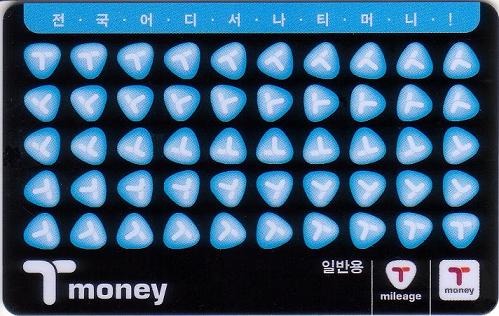
| T-money card | Buses, subway, convenience stores, some taxis and vending machines nationwide | Buy at any CU / GS25 / 7-Eleven / Emart24 for ~₩4,000 + load. Add to Samsung Wallet on a Galaxy. Apple Wallet does not support T-money for foreign iPhones as of 2026 — carry the plastic card. |
| Contactless credit card (Visa / MC / Amex) | Almost every restaurant, shop, hotel, and Kakao T taxi | Tap-to-pay works everywhere. Bring a card with no foreign-transaction fee. |
| Wowpass / Namane card | Everywhere a T-money and a Korean credit card work | Tourist-only combo: a prepaid card + T-money in one. Top up with your foreign credit card at Wowpass kiosks (in Incheon and around Seoul) — useful for places that don't take foreign cards. |
| KakaoPay / Naver Pay QR | Locals' default at cafes, delivery, some pojangmacha | Registration requires a Korean bank account and 010 phone number — skip as a short-term tourist. |
| Cash (₩) | Traditional markets (Gwangjang, Namdaemun), temples, some older restaurants | Withdraw at Global ATMs at any Woori / KB / Shinhan / IBK branch or in a convenience store — look for “Global” on the machine. |
| Foreign Apple Pay / Google Pay | Chain retailers, big restaurants, most terminals with NFC | Works via the underlying card — not the same as adding a Korean T-money. |
Tax-free shopping — 10% VAT refund at the airport
Foreign tourists get a 10% VAT refund on eligible purchases of ₩15,000 or more per receipt at any store displaying “Tax Free” signage. Two paths: immediate discount at the register for smaller purchases (typical cap ₩500,000 per receipt, ₩2,500,000 per stay), or refund at the airport — scan your receipts and passport at a Tax-Refund kiosk in Incheon or Gimhae after check-in, then either get cash or a card refund. Present unopened purchases if requested. Bring 30 extra minutes if you did real shopping.
Trains and subway: KTX, Seoul Metro, and the Korail Pass


Korea's KTX (Korea Train eXpress) is the high-speed rail network run by Korail. Seoul ↔ Busan is roughly 2 hours 15 minutes at ~305 km/h; a one-way economy ticket is about ₩60,000 booked in advance. Other trunk lines cover Seoul ↔ Gwangju, Seoul ↔ Gangneung (the 2018 Olympic line), and Seoul ↔ Mokpo. Book on the Korail Talk app (English, foreign cards accepted) or at any station.
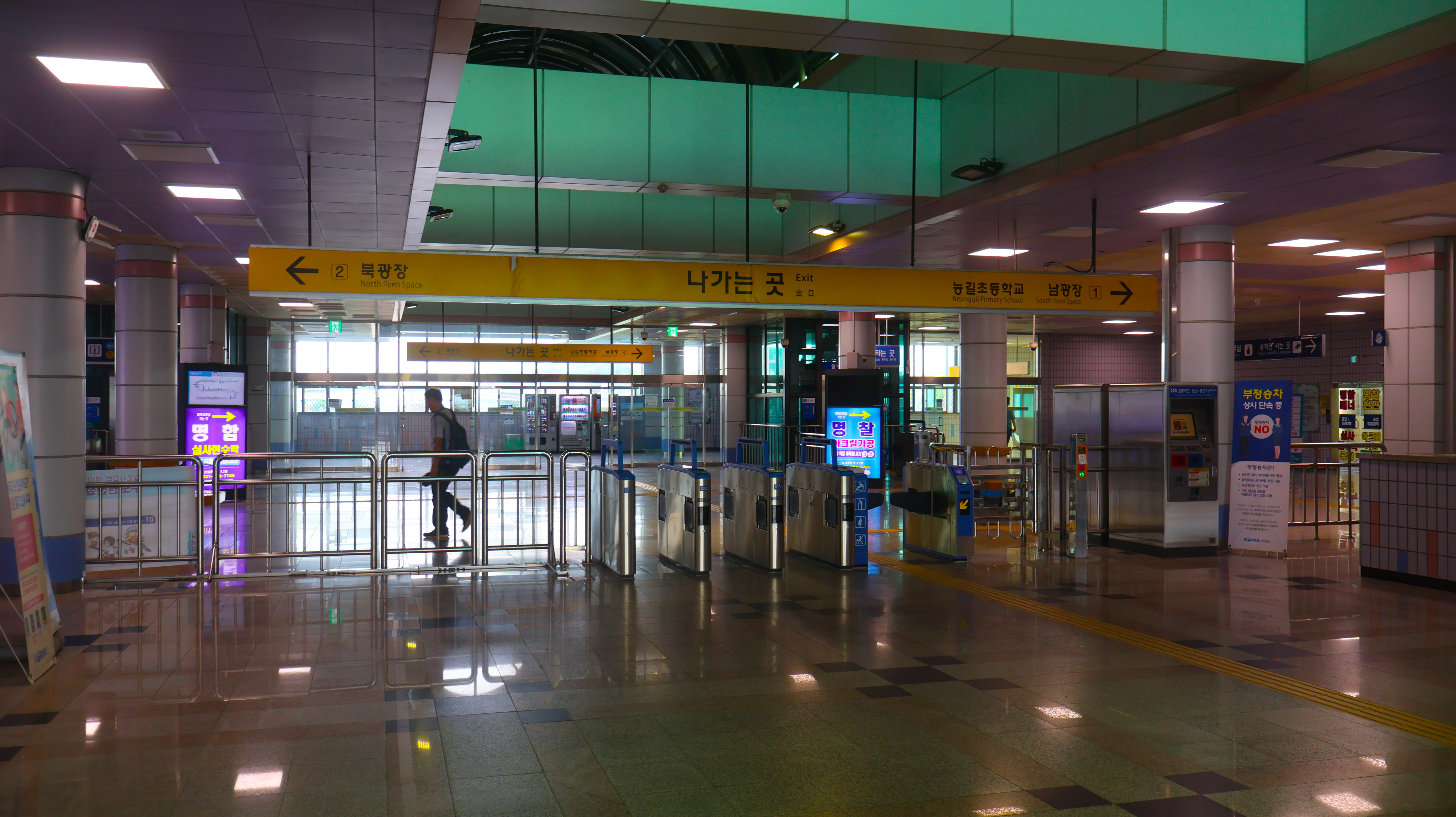

In Seoul, the subway is fast, cheap and obsessively signposted in Korean + English + Chinese + Japanese. Base fare is ₩1,400-₩1,500 with T-money, with distance-based add-ons over 10 km. The Seoul network alone has 20+ lines including private operators — Naver Map or Kakao Map show which line/exit to use for anywhere you want to go.
The Korail Pass is a tourist-only pass valid on most KTX and regular trains. It makes sense only if you're doing at least one multi-leg intercity loop within a short window. Rough math:
| Your trip | Korail Pass? | Why |
|---|---|---|
| Seoul only, all week | Skip it | T-money on the subway costs pennies per ride — no KTX needed |
| Seoul ↔ Busan return, one week | Borderline | Two KTX tickets ~₩120,000 vs. 2-day flexible pass ~₩130,000 — do the math on korail.com |
| Seoul + Busan + Gyeongju + Gangneung, 5 days | Yes | 4-day flexible pass pays back with room to spare |
The Naver Map / Kakao Map trap (this is the one nobody warns you about)
This is the single biggest “why isn't this working” moment for first-time visitors to Korea, and almost no tourist brochure warns about it: Google Maps in Korea cannot give you walking directions. Ask it to route you from your hotel to a restaurant four blocks away and it will either sit blank, refuse, or give a driving-only route that ignores the pedestrian shortcut. Transit routing is patchy. Business listings are sparse.
Why? A quirk of Korean law. Under the 1961 Survey Act, high-precision Korean mapping data is treated as a national security asset and cannot be exported outside the country. Google renders directions on servers in the United States and the Netherlands, not Korea, so it cannot access the underlying road-and-footpath data. In 2016 and again in 2023 Google formally requested exemption to store Korean map data on its overseas servers; both requests were denied. The workaround the country runs on is two local apps.


The two apps every local uses, both free, both with English UI, both installable on Wi-Fi before you fly:
- Naver Map — the default. Best walking directions, best transit routing (bus + subway with real-time arrivals), decent food listings. Address search accepts English transliteration, Hangul, or a jibun address (address by lot number). Comes with an English toggle in Settings. This is the one to install first. map.naver.com
- Kakao Map — the alternative from the same company that makes KakaoTalk. Better than Naver for restaurant reviews and cafe listings, similar routing quality. Foreign users can install it and browse without registering a Korean account. map.kakao.com
- TMap — the driving-specific app most Koreans use behind the wheel. If you rent a car, install this in addition to Naver / Kakao Map for turn-by-turn driving.
The install order that saves your first day: on the plane / on Wi-Fi before you land, install Naver Map, switch the language to English in Settings, and search for your first hotel by name. If it finds it and gives you a walking route from a landmark, you're good. Google Maps stays useful for one thing only: hotel search on the flight over, because the listings and photos are richer than in Naver.
Buses: T-money, front-door on, middle-door off
Korean city buses are colour-coded by function — in Seoul: blue (파랑) long-distance trunk routes, green (초록) local neighbourhood routes, red (빨강) express commuter to satellite cities, yellow (노랑) loop routes in the city centre, and village (마을) minibuses on narrow streets. Other cities follow the same colour system with local variations. The tap ritual is the same everywhere in the country:
The rules that trip up tourists:
- Tap on at the front door, tap off at the middle/rear door. Both, every ride. The system uses the two taps to calculate distance-based fare (base ~₩1,500 in Seoul + a small add-on over 10 km) and to credit you the transfer discount if you switch to another bus or subway within 30 minutes.
- Miss the tap-off and you lose the transfer. The system assumes you rode to the end of the route and charges the maximum fare. Your next tap within the transfer window is treated as a new full-fare journey, not a discounted transfer — you can be out ₩3,000 on a Seoul-to-suburb bus + subway leg.
- You can pay with a contactless credit card at the reader on newer buses, but it does not chain into the transfer discount the way T-money does. For anything beyond one ride, buy a T-money card and use it.
- Cash still works on most buses — drop coins/notes at the front and the driver hands you a paper receipt with the fare printed. No transfer discount, no change from a ₩10,000 note (bring small notes).
Taxis: hailing, meters, and the Kakao T app
_LPi_Taxi_by_seoul.JPG)
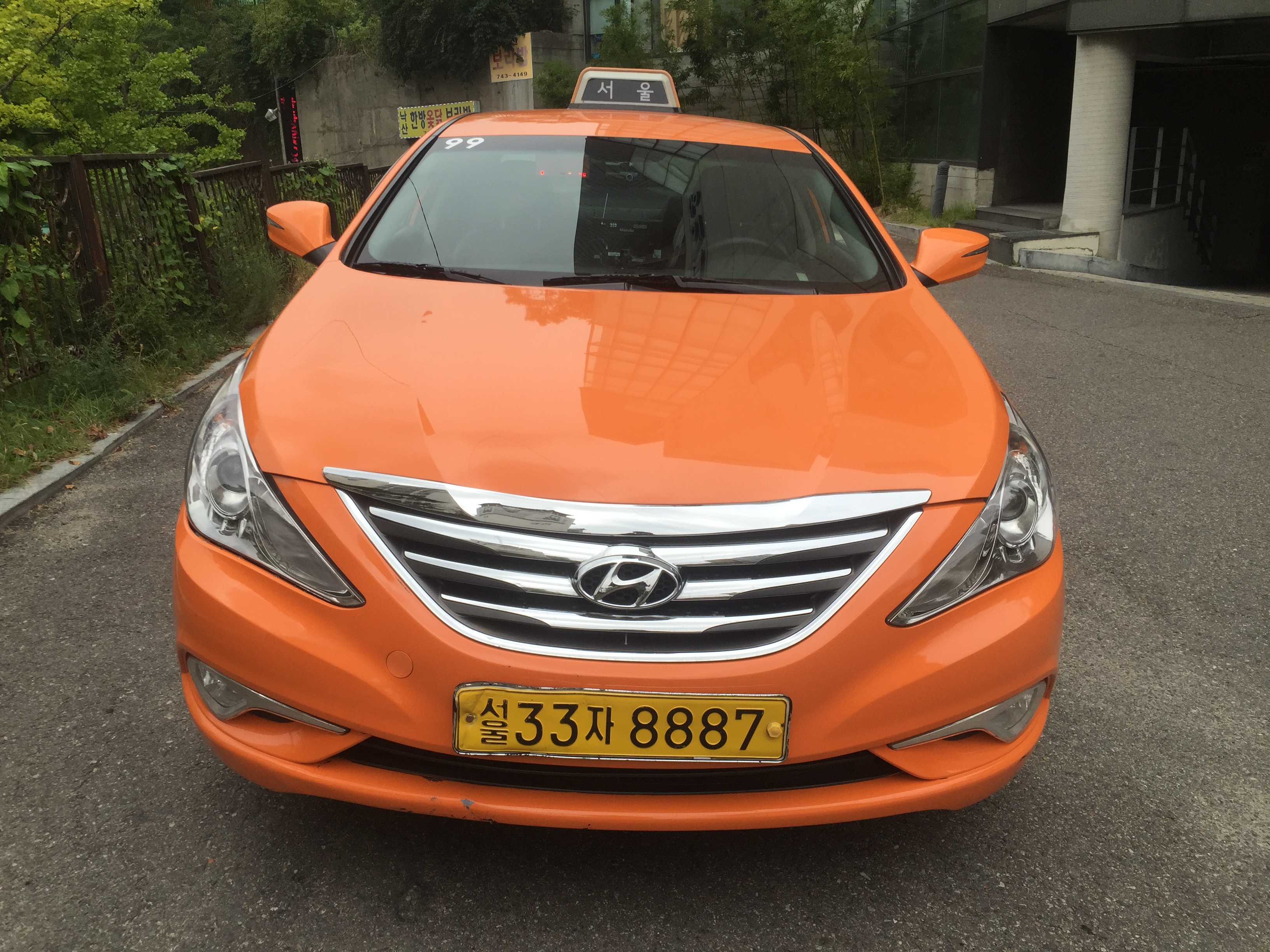
Taxis in Korea are metered, cashless in every big city (they take contactless card and Kakao T in-app), and abundant. Doors are manual — open and close them yourself (this is where a lot of Japan repeat-visitors get caught out). There is no tipping. Fares in Seoul start around ₩4,800 for the first 1.6 km and click up in ₩100 increments; late-night (00:00-04:00) adds a 20% surcharge. Taxi types you'll see:
- 일반 (ilban) — standard, silver or white. This is the vast majority. Meter, card accepted, English limited but ubiquitous.
- 모범 (mobeom) — deluxe, black with a yellow sign. Higher base fare, more experienced drivers. Ask your hotel to call one.
- International Taxi — orange, drivers certified in English / Japanese / Chinese. Same meter as regular taxis, just easier communication. Great from Incheon.
Two apps to know:
- Kakao T — the dominant taxi-hailing app in Korea (~90% share). English UI available, foreign credit cards accepted (though occasionally finicky — add two cards). Also does airport transfers, bike rentals and pre-order “Blue” premium sedans. This is the install. kakaocorp.com
- Uber Taxi — Uber partners with local taxi companies in Seoul, Busan, Incheon and Jeju. If you already have Uber installed with a card that works globally, this is the zero-friction option. Coverage is smaller than Kakao T.
One thing to know: at 2am after clubs close, downtown taxi supply in Gangnam / Hongdae goes to zero — drivers who cruise past do “refusal picks” and only take fares to long-distance destinations. Kakao T's pre-book feature or an Uber Taxi request from a spot away from the crowd is the workaround.
Renting a car: IDP, drive on the right, Hi-Pass tolls
Renting a car in Korea makes sense for Jeju Island, the east coast (Gangneung, Sokcho), the Namhae region, or any inland loop off the KTX grid. In Seoul, don't — parking is expensive and the subway is faster. Korea drives on the right, steering wheel on the left. The rules by nationality:
| Your licence | What you need | Where to get it |
|---|---|---|
| 🇨🇦 CA / 🇺🇸 US / 🇬🇧 UK / 🇦🇺 AU / 🇳🇿 NZ / most EU | 1949 Geneva IDP + home licence + passport | CAA / AAA / AA / your national auto club — before you fly. Physical booklet only, no digital. |
| 🇹🇼 Taiwan / 🇭🇰 Hong Kong | 1949 IDP (Taiwan issues these through the DMV / motor vehicles office; HK through the Transport Department) | Before you fly. HK issues an IDP within a few days for HK$80. |
| 🇯🇵 Japan / 🇨🇭 Switzerland / a few others | Officially recognised licence + Korean translation from the driver's licence agency | Order online or through your rental company; details on Korea Road Traffic Authority. |
On the road, the essentials: seat belts front and back, zero tolerance for alcohol (Korea's limit is 0.03%; the “Yoon Chang-ho Law” imposes severe penalties for drink-driving), speed cameras everywhere. Speed limits are 50 km/h in urban zones (dropped in 2021 from 60 km/h for the Safe Speed 5030 policy) and 100-110 km/h on expressways.
Two things to know: Hi-Pass and fuel types. Hi-Pass is the electronic toll transponder that lets you drive through the “하이패스” lane on any expressway toll plaza. Almost every rental car comes with a pre-installed Hi-Pass card — ask at the counter, pay a small flat rental fee, and tolls are automatically billed at checkout. Without it you queue at the cash lane. Fuel: 휘발유 (hwibalyu, gasoline, red hose), 경유 (gyeongyu, diesel, green hose), LPG (엘피지), and increasingly 전기 (jeongi) chargers. Almost all urban stations are self-serve; press the touchscreen, insert card, pump.
Korean phrases that will quietly upgrade your trip
You don't need to speak Korean to travel Korea. But a handful of phrases — delivered with a small nod — noticeably change how people treat you. Here are the ones with the highest return.
“Hello (polite)” — the universal polite greeting — say it walking into a shop, restaurant, taxi, or ryokan-style guesthouse
“Thank you (polite formal)” — say it to shop staff, taxi drivers, restaurant servers — the full form beats a casual gomawoyo with strangers
“Sorry / excuse me (apology)” — stronger than mianhaeyo — use if you bump into someone, apologise for a mistake, or get in their way
“Excuse me — over here” — the polite way to flag a waiter in a Korean restaurant — the tables aren't visited by default, you call them
“This one, please” — point at the menu / picture / plastic display item — universal ordering hack
“Do you have an English menu?” — most restaurants near tourist areas do, hidden under the counter
“How much is it?” — at traditional markets and small shops where prices aren't tagged
“The bill, please” — in most restaurants you take the bill to the register at the door — but this still works if you can't spot it
“Where is the toilet?” — answered with a point 90% of the time — nod gamsahamnida and go
“It's okay / I'm fine / no thanks” — the polite decline — waiter offers extra side dishes, someone offers help you don't need, driver asks if a longer route is okay
“It's delicious” — the compliment every ajumma restaurant owner wants to hear — say it once during the meal and watch what happens
“No cash receipt needed” — cashiers routinely ask for your local phone number to issue a hyeongeum-yeongsujeung (cash receipt) for tax rebates — this politely declines it
Cultural norms: the eight things that catch visitors out
- Don't tip. Not at restaurants, not in taxis, not at guesthouses, not with the tour guide. Leaving cash on the table is confusing at best. Good service is the baseline.
- Two hands for anything important. When handing over your credit card, receiving change, accepting a drink from someone older, or exchanging business cards — use both hands (or right hand supported at the wrist by the left). Small gesture, huge signal of respect.
- Shoes off. In every home, most guesthouses, Korean-style restaurants with floor seating, and traditional-style shops. Watch for the step-up at the entrance — that's the shoe line.
- Never pour your own drink. At a Korean table, you pour for others (especially anyone older) and they pour for you. Pouring your own glass reads as anti-social. Same rule at soju rounds — hold the glass with two hands when someone older is pouring for you.
- Don't stick chopsticks vertically in a rice bowl. The visual mirrors the incense sticks placed on a funeral offering. Rest them on the chopstick rest or across the top of your bowl.
- Age matters. Wait for the oldest person to lift their spoon before you start. On a subway, the priority seats at either end of the car are for the elderly, pregnant women, and disabled riders — sit there only if nobody else needs it.
- Quiet-ish on public transport. Not as strict as Japan, but keep calls short and headphones on. On the KTX, no calls in the passenger cabin — step to the vestibule.
- Tattoos and jjimjilbang. Some jjimjilbang (Korean bathhouses) restrict visible tattoos — the association with older gang culture lingers, though it's fading in Seoul and Busan. Cover with a waterproof bandage or search “tattoo friendly jjimjilbang” before you visit. Swimsuits are not worn in the bathing areas — the towel is for your walk from locker to bath, not the bath itself.
Convenience stores, delivery, coin lockers — the little Korea experience
These are the daily-use systems that make Korea feel unusually functional — and they save first-time visitors a ton of money and stress.
Convenience stores (편의점). CU, GS25, 7-Eleven, Emart24 and Ministop have collectively saturated the country — there are over 55,000 stores nationwide, most open 24/7, and the density in Seoul is such that you're rarely more than a block from one. You can eat surprisingly well for ₩5,000-₩8,000 (gimbap + ramyeon + banana milk), reload your T-money, buy an umbrella when it rains, pick up ISOMs (Korean isotonic drinks), use the ATM if it's a Global one, and print anything you emailed to the store. Ready-made meals are heated by the microwave next to the register.


Food delivery. Korea invented modern app-based food delivery. Locals use Baemin (배달의민족) and Coupang Eats, both of which require a Korean phone number (010) to register — not usable by short-term tourists. The workaround for hotel-room delivery: Shuttle Delivery (shuttledelivery.co.kr) is a foreigner-focused English service that delivers from Western and Korean restaurants in Seoul with a foreign credit card. Rider hands off at the hotel front desk.
Coin lockers (물품 보관함). Every major subway station and every KTX station has a wall of them — small ₩3,000-₩4,000, medium ₩5,000-₩7,000, large ₩10,000. Newer lockers take T-money and issue a QR receipt. Perfect for the day you arrive with luggage but can't check into your hotel yet, or for a Seoul day-trip from Busan where you leave your bag at Seoul Station.
Toilets. Even the free public ones at subway stations and parks are usually clean. Bidets are common in hotels and cafes. Toilet paper often lives in a shared dispenser outside the stalls in older public restrooms — grab a wad on the way in.
Staying connected: skip the roaming bill
Your home carrier's Korea roaming add-on runs C$12-15 or roughly US$10 per day — for a two-week trip that's $150+ just to load Naver Map. A Korea travel eSIM gets you the same SK Telecom or LG U+ network for a few dollars total.
The setup that works best: install the Korea eSIM on Wi-Fi before you fly, keep your home SIM in the phone with roaming off so your number still receives SMS two-factor codes, and set the eSIM as your data line. Land, walk out of Incheon, Naver Map already knows where you are. Related reads:
- Best South Korea eSIM 2026 — buying guide
- Korea eSIM vs home carrier roaming
- Korea eSIM with a local phone number
- Airalo vs Holafly Korea comparison
FAQ
QDo I need a visa to visit South Korea in 2026?
AFor short-term tourism, citizens of most Western countries can enter Korea visa-free — Canada up to 6 months, the United States 90 days, the UK 90 days (extendable to 6 months by treaty), Australia 90 days, New Zealand 90 days, Japan 90 days, and all Schengen countries 90 days. Chinese, Indian and Filipino passport holders need a visa in advance. Confirm your passport at the Korean Ministry of Foreign Affairs (mofa.go.kr) before you book — the list is updated periodically.
QDo I need K-ETA for Korea in 2026?
AAs of the K-ETA authority's announcement dated March 20, 2026, the temporary K-ETA exemption for 22 nationalities — including Canada, the United States, the United Kingdom, Australia, New Zealand, Japan, Singapore, Hong Kong, Taiwan and all Schengen countries — was extended again. Visitors from those countries can enter Korea for short-term tourism without applying for K-ETA. Note the catch: the arrival-card waiver belongs to travellers who actually hold a K-ETA, so if you arrive under the exemption without a K-ETA, you must still make an arrival declaration — the free e-Arrival Card at e-arrivalcard.go.kr, or a paper card, which the official guide says has the same effect. If your passport is not on the exemption list, you must apply at k-eta.go.kr at least 72 hours before departure; the fee is around 10,000 won (~US$2-8). Always verify your specific passport on k-eta.go.kr before you fly, because these exemptions are extended year-by-year.
QWhy don't Google Maps walking directions work in Korea?
AIn 2016 the Korean government declined Google's request to export high-precision Korean mapping data outside the country, citing national security concerns about mapped military installations. Because Google renders directions on servers outside Korea, walking and transit routing in Korea is incomplete or missing entirely. Driving directions work partially. Locals use Naver Map (naver.com) and Kakao Map (kakao.com/kakaomap) — both have English UI, both work perfectly for walking, transit, taxi and food search, and both are free. Install one on Wi-Fi before you fly.
QHow does T-money work on a Korean bus?
AYou must tap T-money BOTH when you board (on the reader by the front door) AND when you get off (on the reader by the middle or rear door). If you forget to tap out, the system assumes you rode to the end of the line and charges you the full distance — and your transfer discount to the next bus or subway within 30 minutes is voided. Buy a T-money card at any CU / GS25 / 7-Eleven / Emart24 for around 4,000 won plus load, then reload at the same convenience stores or at every subway station kiosk. A tourist-friendly alternative is the Wowpass or Namane card, which combines T-money with a prepaid card foreign visitors can top up with a credit card.
QShould I tip in Korea?
ANo. Tipping is not customary in Korea — restaurants, taxis, hotels, tour guides and hairdressers don't expect it, and pressing cash on a taxi driver can cause confusion. Service is priced in. Small exceptions: airport porters and some high-end Western hotels attached to international chains have started to accept discretionary tips, but even there it's not expected.
QWhat's the cheapest way to get mobile data as a tourist in Korea?
AA Korea travel eSIM installed on your unlocked phone runs on SK Telecom or LG U+ for a fraction of the C$12-15 / US$10 per day most home carriers charge for a roaming pass. Install it on Wi-Fi before you fly, set it as your data line, and keep your home SIM active for calls and two-factor codes. Pocket Wi-Fi rental at Incheon still exists but is another device to carry and charge — an eSIM is simpler for most travellers.
Photo credits
In-post photos are used under their respective Creative Commons or Public Domain licences. Full source pages are linked in each caption.
- KTX at Seoul Station — Tokorozawa22, CC BY-SA 3.0.
- Seoul-area subway fare gates — LandAndTree, CC0.
- T-money card close-up — Zisk, Public domain.
- Gwangjang Market, Seoul — Bgag, CC0.
- Standard orange Seoul taxi — U2em, CC BY-SA 3.0.
- Coin lockers at a Korean subway station — Narubaru7, CC BY 4.0.
Bottom line
Korea rewards a small amount of preparation with an outsized amount of ease. Before you fly: confirm you don't need a visa on MOFA, verify your K-ETA status at k-eta.go.kr, install Naver Map and switch it to English, install Kakao T for taxis, and set up a Korea eSIM so your phone is online before you leave arrivals. On the ground: don't tip, buy a T-money card at the first convenience store you see and remember to tap OFF at the middle door, two-hand anything you hand over, and say gamsahamnida a lot. Everything else works out.
Originally published on www.yonosim.com/en/blog/korea-travel-guide-2026 · YonoSIM — You Only Need One SIM