
World Cup 2026: Driving a Rental Car Across Borders
Most major rental companies let you take a US-rented car into Canada with a free non-resident insurance card, but driving into Mexico is restricted — most chains prohibit it, and those that allow it require extra Mexican liability insurance (about US$38–48/day). Here's what World Cup 2026 fans need before they drive between host cities.
Published June 11, 2026·5 min read
Summary
Most major rental companies let you take a US-rented car into Canada with a free non-resident insurance card, but driving into Mexico is restricted — most chains prohibit it, and those that allow it require extra Mexican liability insurance (about US$38–48/day). Here's what 2026 World Cup fans need before driving between host cities.
A tournament made for road trips
With 16 host cities across the US, Canada and Mexicofrom June 11 to July 19, 2026, plenty of fans will drive between nearby venues — think cross-border hops or runs between US cities. The catch is that rental rules change sharply once a border is involved, so confirm before you book.
US ↔ Canada: usually allowed
Most major chains — Avis, Budget, Hertz, Enterprise and National — permit US-to-Canada travel for most car categories, and US counters issue a free Canadian Non-Resident Insurance Card showing you're covered abroad. At the border you'll need proof of citizenship, the rental agreement and your driver's licence. The same is true heading to Toronto or Vancouver.
Into Mexico: restricted and insured
Mexico is stricter. According to industry guides, Alamo, Enterprise and National prohibit taking their US or Canadian cars into Mexico, while Hertz and Thrifty allow it only with prior authorization, premium roadside cover and mandatory Mexican liability insurance (about US$38–48/day) — typically from border states only. Mexican law requires local liability insurance even if your US policy applies, so renting locally for Mexico City, Guadalajara or Monterrey is often simpler.
Cross-border rental rules at a glance
| Route | Typically allowed? | Need to know |
|---|---|---|
| US → Canada | Yes (most chains) | Free non-resident insurance card; tell the agent |
| US → Mexico | Often prohibited | Extra Mexican insurance ~US$38–48/day; border states only |
| Within one country | Yes | Standard rental terms; carry licence |
Navigation needs data — eSIM vs roaming vs pocket Wi-Fi
A road trip lives on live maps, traffic and fuel-stop searches — all of which need data the second you leave Wi-Fi. Here's how the options compare for staying connected behind the wheel:
| Option | Cost | Setup time | Coverage |
|---|---|---|---|
| eSIM | Low | ~5 min (pre-install on Wi-Fi) | Excellent (local carrier) |
| Carrier roaming | High | Instant (already enabled) | Medium (partner-dependent) |
| Pocket Wi-Fi | Medium | Airport pickup / rental | Good (extra device to charge) |
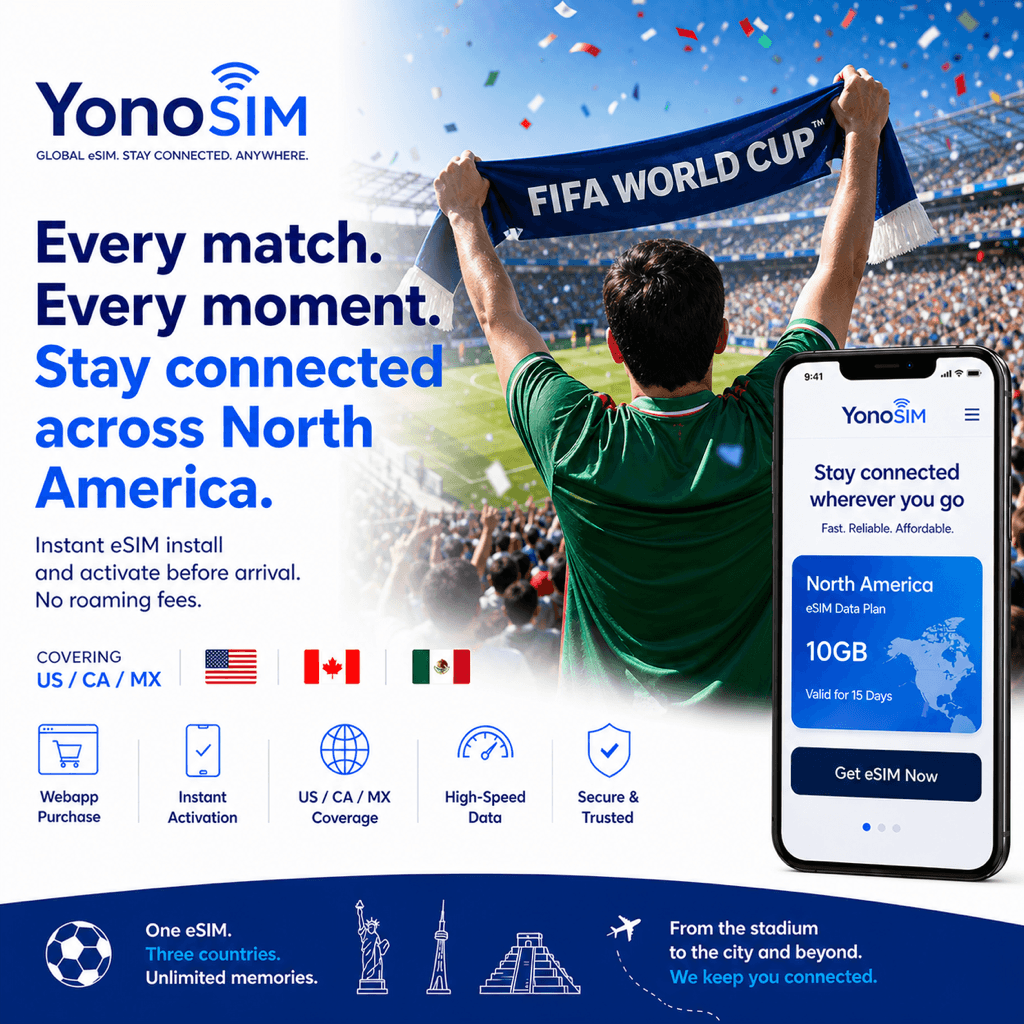
A North America eSIM keeps maps and navigation live across all three countries on one planfrom US$5 — no roaming surprises when you cross from the US into Canada.
FAQ
QCan I drive a US rental car into Canada for the World Cup?
AUsually yes — major chains like Avis, Budget, Hertz, Enterprise and National generally allow US-to-Canada trips and issue a free Canadian Non-Resident Insurance Card. Tell the agent your plan and keep proof of citizenship and the rental agreement for the border.
QCan I drive a US or Canadian rental car into Mexico?
AOften no — many chains including Alamo, Enterprise and National prohibit taking their cars into Mexico. Some, like Hertz and Thrifty, allow it with prior authorization, extra roadside cover and mandatory Mexican liability insurance (about US$38–48/day), usually only from border states.
QDo I need an International Driving Permit?
ANot strictly to rent in the US or Canada with an English-language licence, but it's recommended for Mexico and useful everywhere as an official translation. Always carry your actual home licence alongside the IDP.
QDoes my own car insurance cover me across borders?
AOften only partly — many US policies extend to Canada and parts of Mexico, but Mexican law requires separately purchased local liability insurance. Confirm with your insurer and rental company before you cross.
Bottom line
Driving to Canada is usually fine with the free insurance card; driving into Mexico means extra paperwork and insurance, so renting locally is often easier. Keep navigation live with a North America eSIM, check our host-city transit guide, and grab your World Cup 2026 eSIM before you set off.