
World Cup 2026 Opening Weekend Travel: Flights & Transit
Opening weekend runs June 11–15 across Mexico City, Toronto, Los Angeles, and the Bay Area. Here is how to plan flights, hotels, and stadium transit — and stay online across all three host countries.
Published June 10, 2026·5 min read
Summary
Opening weekend runs June 11–15 across Mexico City, Guadalajara, Toronto, Los Angeles, the Bay Area, and more, so the smartest plan is to base yourself in one regional cluster rather than crisscross the continent. Here is how to handle flights, hotels, and stadium transit — and stay online across all three host countries.
Pick a base, not a marathon
FIFA groups the 16 host cities into Western, Central, and Eastern regions to limit early travel. On opening weekend that means the June 11 matches sit in Mexico (Mexico City and Guadalajara), June 12 splits between Toronto and Los Angeles, and June 13–15 spread across the Bay Area, New York/New Jersey, Boston, Atlanta, Seattle, and Miami. Cross- region hops are long-haul flights, so most fans do best choosing one cluster and catching two or three matches plus the Fan Festival.
Flights, hotels, and transit at a glance
| Plan for | Opening-weekend tip |
|---|---|
| Flights | Book inbound 1–2 days early; opening-day demand peaks into Mexico City and LA |
| Hotels | Stay near transit lines, not the stadium — venues sit outside downtowns |
| Stadium transit | Use Metro/rail + match-day shuttles; parking is limited and pricey |
| Tickets | Mobile-only via the FIFA World Cup 26™ App — keep your phone charged |
| Border crossings | Carry entry documents; allow extra time at land and air borders |
For city-specific routing, see our getting-there guides for SoFi Stadium in Los Angeles, BMO Field in Toronto, and the Estadio Azteca transit guide. Cross-border fans should also read the USA entry guide.
Staying connected on the move
Every part of match-day travel — ride-hailing, transit apps, mobile tickets, and translation — runs on data. Roaming across three countries adds up fast, so compare your options before you fly.
| Option | Cost | Setup time | Coverage |
|---|---|---|---|
| eSIM | Low | ~5 min (pre-install on Wi-Fi) | Excellent (local carrier) |
| Carrier roaming | High | Instant (already enabled) | Medium (partner-dependent) |
| Pocket Wi-Fi | Medium | Airport pickup / rental | Good (extra device to charge) |
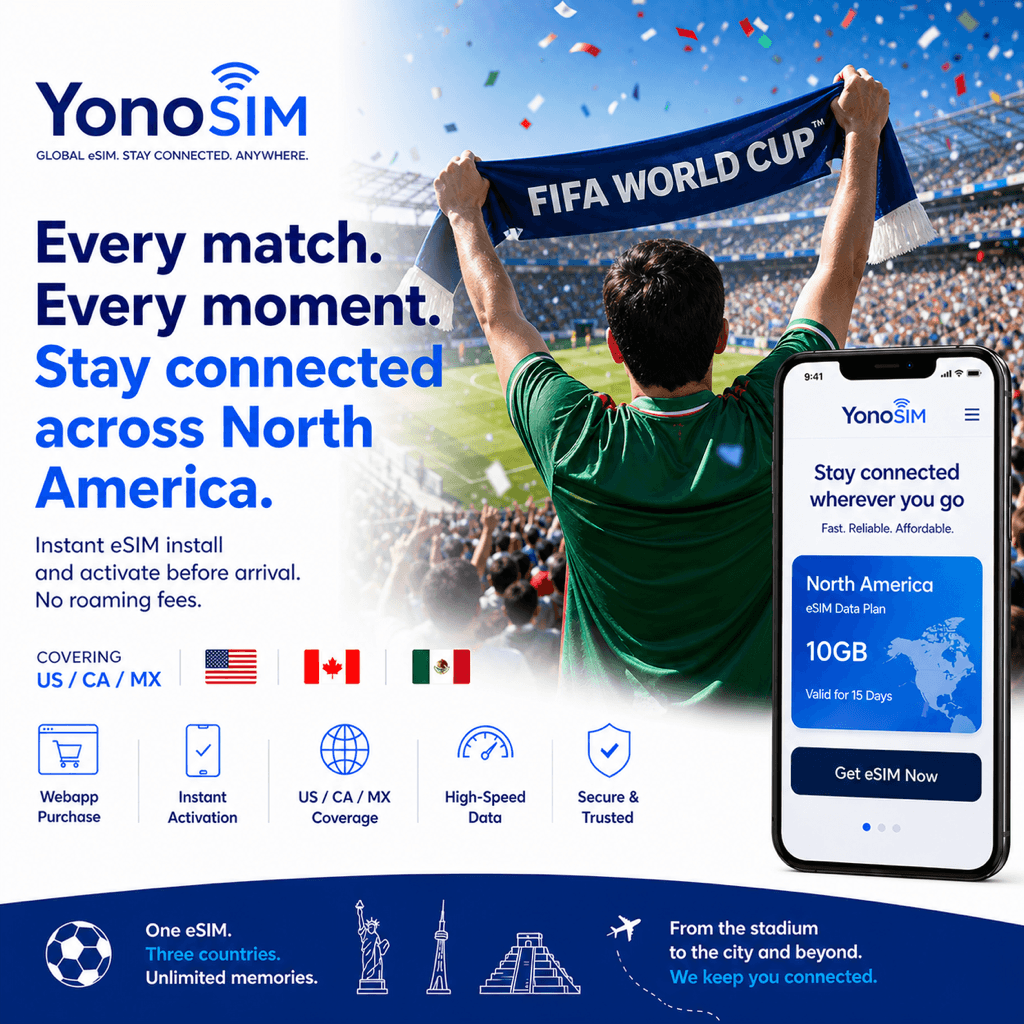
US and Canadian carriers typically charge US$10–15/day to roam in Mexico, and overseas fans pay more. A single North America eSIM covers all three host countries on one plan, from US$5 with Apple Pay, Google Pay, or card. Install it with our opening-weekend eSIM setup guide.
FAQ
QWhich cities host World Cup 2026 opening-weekend matches?
AEleven host cities across June 11–15. Mexico City and Guadalajara on June 11, Toronto and Los Angeles on June 12, then the Bay Area, New York/New Jersey, Boston, Atlanta, Seattle, and Miami across June 13–15.
QShould I fly between host cities or pick one base?
APick one base for opening weekend. Host cities sit in Western, Central, and Eastern regions to limit travel, but cross-region trips still mean long flights, so basing yourself in one cluster is far less stressful.
QHow do I get to the stadiums on match day?
AUse public transit and match-day shuttles. Venues sit outside downtowns and parking is limited; in Mexico City, take Metro Line 2 to Tasqueña then the Tren Ligero to Estadio Azteca.
QHow do I stay connected while traveling between host cities?
AOne North America eSIM covers all three countries. Maps, ride-hailing, mobile tickets, and translation keep working as you move between host cities without switching SIMs or paying daily roaming fees.
Bottom line
Opening weekend rewards fans who plan tight: one base city, transit over driving, mobile tickets ready, and a North America eSIM that keeps maps and tickets live across every border. Sort the logistics now and spend the weekend on football, not phone bills.