
Japan Travel Guide 2026: Visas, Payments, Trains, Buses (整理券), Taxis, Rentals & Phrases
The one Japan travel guide that actually shows you how the 整理券 orange bus box works, whether you need a visa (by country, dated), how to pay for a taxi, how to rent a car with an IDP, and the Japanese phrases that make the trip smoother.

Published July 26, 2026·22 min read
30-day auto-refund on no usageSummary
A deep-dive Japan travel guide for 2026 — the one that explains the orange 整理券 (seiri-ken) box that catches every first-time tourist on a Japanese bus, whether your passport gets you in without a visa (dated country table), how PayPay and IC cards work at the register, what to do at the taxi door, whether you can rent a car on your home licence, and the Japanese phrases that quietly upgrade the whole trip. Written first-hand and cross-checked against Japan's MOFA, JAF, and NTA.
Do you need a visa? (dated, by country)
Japan runs a bilateral visa-exemption arrangement with 74 countries and regions for short-term tourism and business. The list is maintained by Japan's Ministry of Foreign Affairs (MOFA) and was last updated September 1, 2025. If your passport is on the list, you get a “Temporary Visitor” landing permission stamped in on arrival — no advance application needed. You do need a passport valid for the length of your stay, and you may be asked to show onward travel and enough funds.
| Nationality | Visa needed? | Max stay | Notes |
|---|---|---|---|
| 🇨🇦 Canada | No | 90 days | Visa-free tourism / business |
| 🇺🇸 United States | No | 90 days | Visa-free tourism / business |
| 🇬🇧 United Kingdom | No | 90 days (extendable to 6 mo) | Apply at a Regional Immigration Bureau before day 90 to extend to 180 days total (not automatic) |
| 🇦🇺 Australia | No | 90 days | Visa-free tourism / business |
| 🇳🇿 New Zealand | No | 90 days | Visa-free tourism / business |
| 🇩🇪 Germany | No | 90 days (extendable to 6 mo) | Same “Note 8” extension option as UK |
| 🇫🇷 France | No | 90 days | Visa-free tourism / business |
| 🇰🇷 South Korea | No | 90 days | Visa-free tourism / business |
| 🇸🇬 Singapore | No | 90 days | Visa-free tourism / business |
| 🇹🇼 Taiwan | No | 90 days | e-passport holders only |
| 🇭🇰 Hong Kong (SAR) | No | 90 days | HKSAR / BN(O) passports |
| 🇨🇳 China (PRC) | Yes | n/a | Apply in advance at a Japanese embassy / consulate |
| 🇮🇳 India | Yes | n/a | e-Visa available for tourism via the Japan Visas portal |
| 🇵🇭 Philippines | Yes | n/a | Apply through an accredited travel agency; multi-entry available |
Source: MOFA visa-exemption list, current as of 2025-09-01. Verify your specific passport at mofa.go.jp before you book.
JESTA: Japan's pre-screening system is coming (but not yet)
Japan's answer to the US ESTA and EU ETIAS is called JESTA (Japan Electronic System for Travel Authorization). The enabling legislation passed the Diet on May 29, 2026, revising the Immigration Control and Refugee Recognition Act. Once it goes live it will require visa-exempt short-term visitors to apply and be approved online before boarding a Japan-bound flight — think ESTA, small fee, valid for multiple entries over a set period.
Not live in 2026 or 2027. The official target rollout is fiscal year 2028 and it must be in force no later than March 31, 2029. If you're travelling in the next 18 months, ignore it — nothing to file. Bookmark the MOFA visa page and check again if you're travelling in 2028 or later.
Money: cash, IC cards, PayPay, and the November 2026 tax-free change
Japan runs on the yen (JPY, ¥). The country has moved rapidly toward cashless in the last five years — every convenience store, every JR station, every big-city taxi, most chain restaurants, and a huge percentage of small shops now accept cards, IC cards, or the QR-code payment app PayPay. But there are still cash-only corners: many rural buses, smaller ryokan, festival food stalls, shrines, and older mom-and-pop restaurants. A useful baseline is ¥10,000–20,000 of cash in your wallet and IC / PayPay for everything else.
| Payment method | Where it works | Tourist tips |
|---|---|---|
| IC card (Suica / Pasmo / ICOCA) | Trains, buses, konbini, vending machines, taxis, many shops | Add Suica to Apple Wallet on iPhone 8+ or Google Wallet on Pixel — instant. Otherwise buy a Welcome Suica at Haneda / Narita (28-day validity, no deposit). |
| Credit card (Visa / MC / AmEx) | Hotels, chain restaurants, big retail, most tourist attractions | Tap-to-pay works widely. Bring one that has no foreign-transaction fee. |
| PayPay QR | Small restaurants, izakaya, market stalls, some taxis | Foreign visitors can register a foreign phone number and top up with a credit card — huge if you eat at small places. |
| Cash | Rural buses, small ryokan, temples, festivals, old-school restaurants | Withdraw at 7-Eleven or Japan Post (Yūcho) ATMs — they take foreign cards. Airport ATMs work too. |
| Foreign Apple Pay / Google Pay | Chain stores, konbini, some restaurants | Works via the underlying card — not the same as adding a Japanese Suica to Wallet. |
Heads up — tax-free shopping changes November 1, 2026
Until Oct 31 2026 the tourist tax-free system is exemption at the register — you show your passport and pay the tax-free price on the spot. From November 1, 2026 Japan switches to a “pay first, refund at the airport” model: you pay the full tax-included price at the store, then claim the 10% consumption tax back at a refund kiosk in the airport when you leave, within 90 days of purchase. The ¥5,000 minimum per store per day stays; the sealed-bag rule for consumables is dropped. Budget an extra 30 minutes at departure if you did any real shopping.
Source: National Tax Agency & japan-guide.com news.
Trains: JR, subways, and whether the JR Pass is worth it
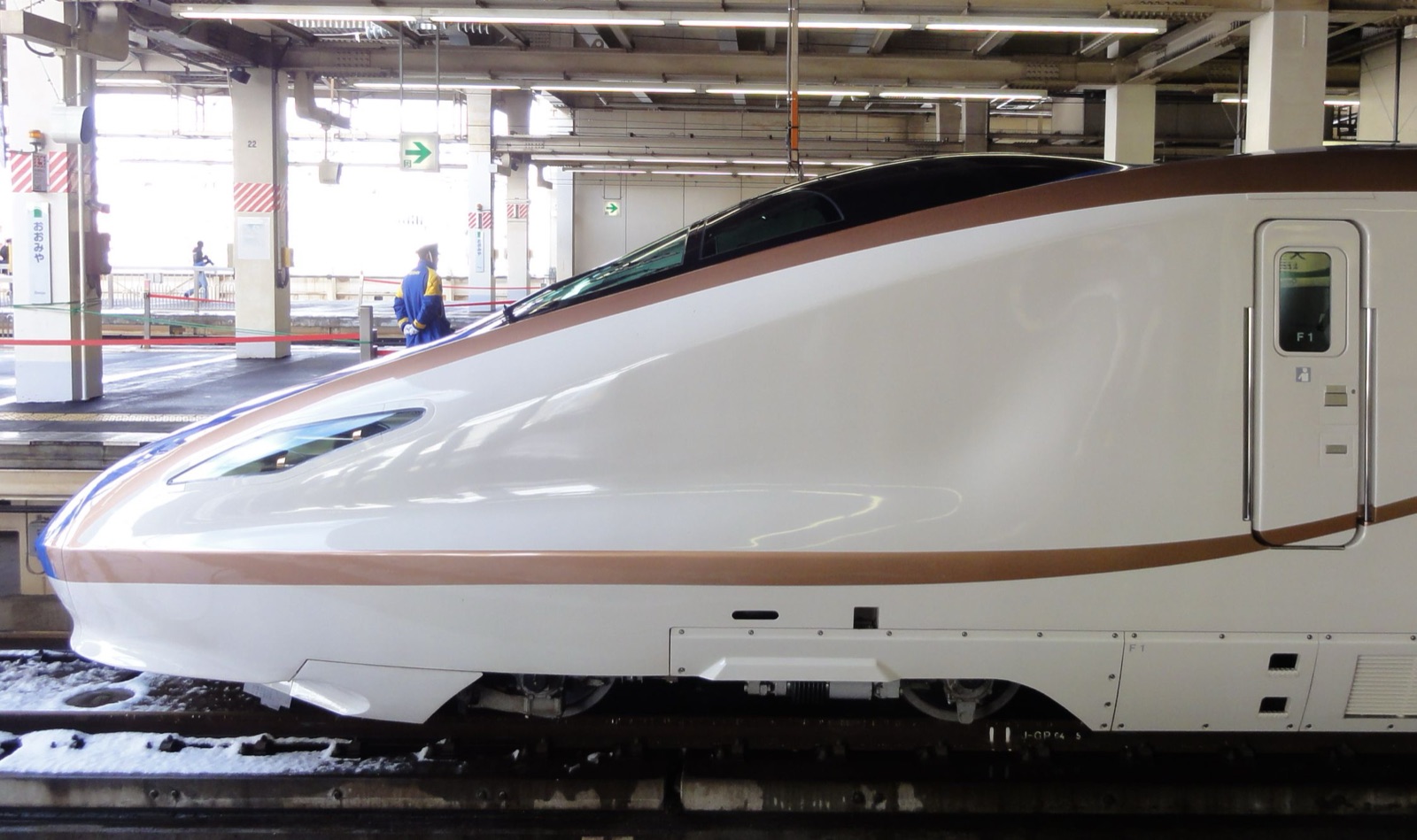

Japan's train system is the reason people rave about the country. In Tokyo, Osaka, and every major city, subways and commuter trains are frequent, obsessively punctual, and quiet. The single most important thing you can do before you leave the airport is get an IC card (Suica, Pasmo, or ICOCA — they all work interchangeably nationwide on trains, subways, buses, and at konbini). Tap in, tap out, done. No paper tickets, no fare-machine arithmetic.
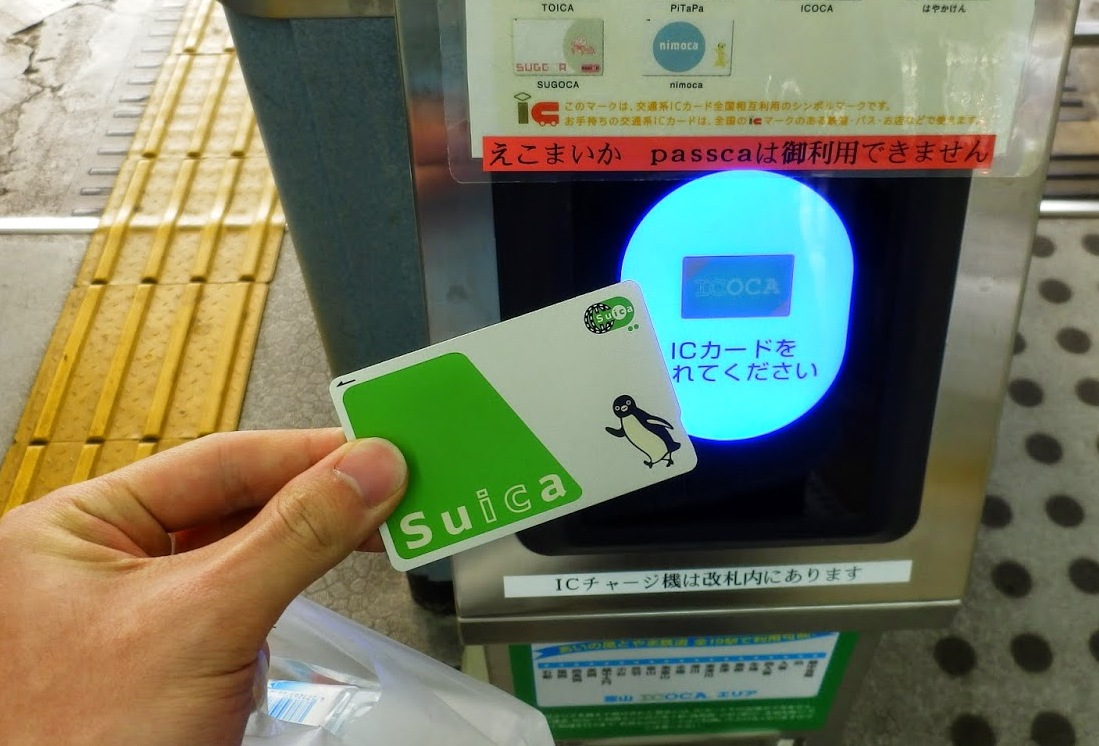

On iPhone 8 or newer and most recent Google Pixels, you can add a Suica directly to Apple Wallet / Google Wallet on the flight over — it's instant and rechargeable with your foreign credit card. If your phone can't do that, buy a Welcome Suica from the JR East Travel Service Center or the dedicated vending machines at Haneda Terminal 3 or Narita Terminals 1 / 2. No deposit, load ¥1,000–¥10,000, 28-day validity, no refund on unused balance — but if you'll be in Japan longer than four weeks or come back regularly, the regular deposit-based Suica is the better pick.
The JR Pass is the tourist rail pass that covers most Shinkansen and JR lines across the country. It was famous as the deal of the century until October 2023 when JR raised the price by roughly 70%. The new math: a 7-day ordinary pass is around ¥50,000 yen. It's only worth it if you're making at least a Tokyo ↔ Kyoto ↔ Hiroshima loop with a Hiroshima extension inside 7 days — roughly 3+ long Shinkansen legs. For a one-way Tokyo ↔ Kyoto trip, buy point-to-point tickets on the JR East / SmartEX app instead.
| Your trip | JR Pass? | Why |
|---|---|---|
| Tokyo ↔ Kyoto only, both directions | Skip it | Point-to-point Shinkansen ~¥28,000 round trip < JR Pass price |
| Tokyo + Kyoto + Hiroshima + return, 7 days | Borderline yes | Do the math with the JR fare calculator — usually ~break-even |
| Tokyo + Kyoto + Osaka + Hiroshima + Kanazawa, 14 days | Yes | 14-day pass pays back with room to spare |
Buses: the 整理券 orange box explained
This is the single most confusing part of Japanese public transport for first-time visitors, and no one prints it in the tourist brochures. Buses in Japan work in two different modes depending on the city:
- Flat-fare mode — central Tokyo, Osaka, Yokohama, Nagoya, and most other big-city core routes. You board through the front door, pay a single fixed fare (usually ¥210–¥240) as you board by tapping an IC card or dropping coins in the fare box, and get off through the middle or rear door. No paper ticket. No fare math.
- Distance-fare mode — Kyoto suburbs (and older Kyoto city routes), Fukuoka, Sapporo, Sendai, Okinawa, and virtually every regional and rural bus in the country. You board through the rear or middle door, the fare depends on how far you ride, and this is where the orange 整理券 box lives.
If you're not sure which mode a bus is in: look at the door that opens as it pulls up. If the front door opens first, it's flat-fare. If the rear or middle door opens first, it's distance-fare and you should grab a 整理券.
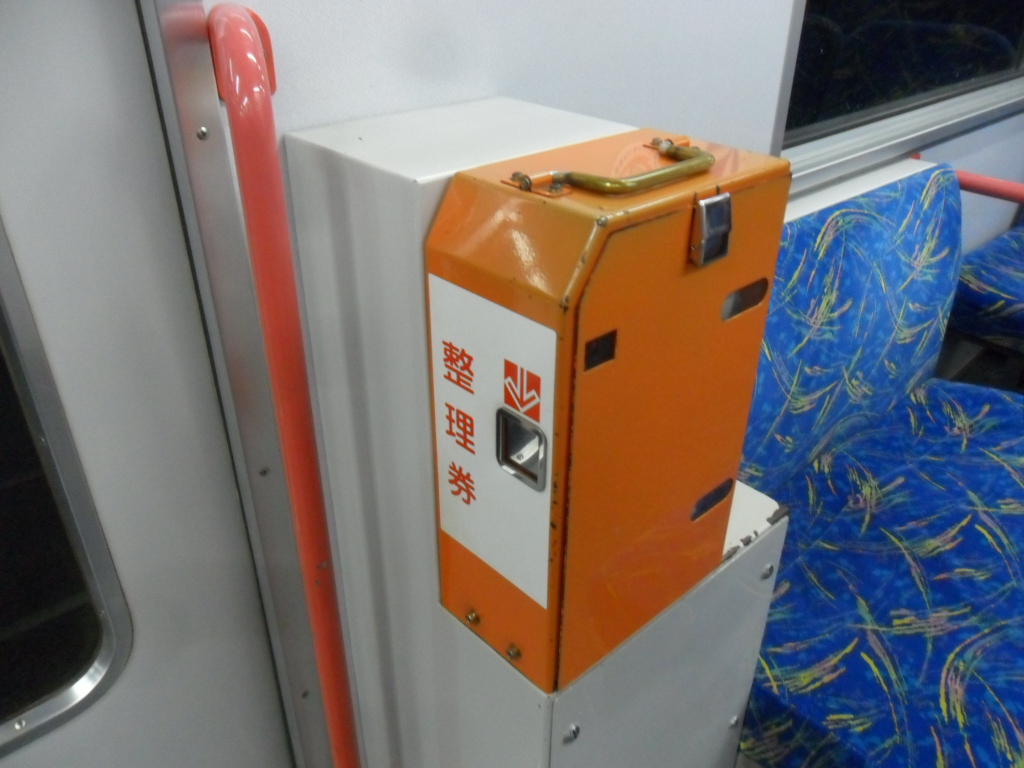

When you board (through the rear or middle door — not the front), you pull a small paper ticket out of the orange dispenser. It's called a 整理券 (seiri-ken) — literally “numbered ticket.” The number on your ticket matches a column on the electronic fare screen at the front of the bus. As the bus moves, all the numbers on that screen tick up. Your number's column shows the current fare for someone who boarded at that stop.
When your stop is announced, press the yellow next-stop button on the wall or ceiling and walk to the front door — where the driver sits — to get off. Look at the fare screen: whatever amount is next to your ticket's number is what you owe. Now use the fare box (料金箱) beside the driver:
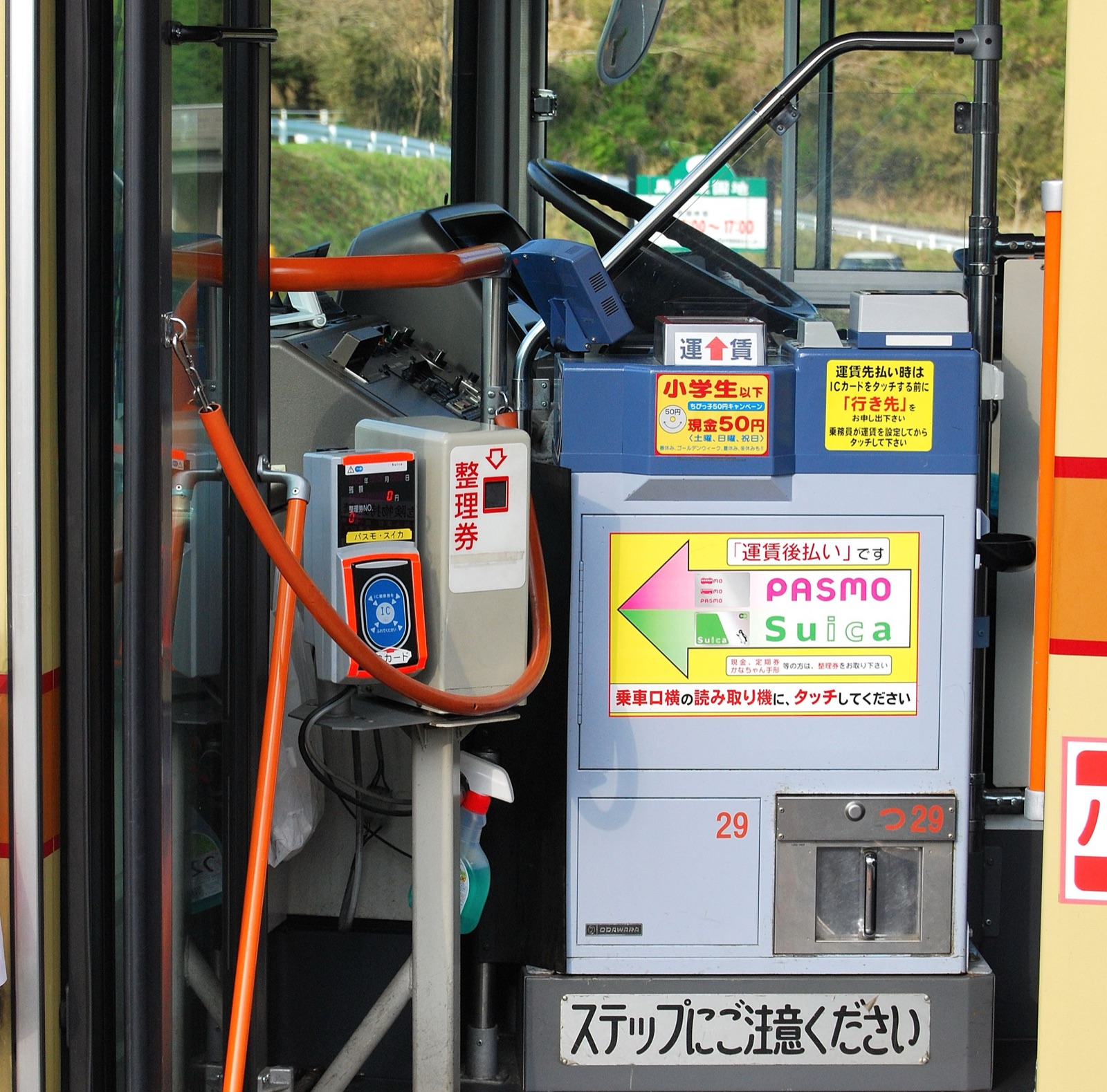

- Paying with an IC card is the easy path: tap when you board (there's a reader near the rear door) and tap when you get off. The machine calculates the fare for you. You never need the paper 整理券 if you tap.
- Paying with cash is where tourists trip up: the fare box takes exact change only. If you have a ¥1,000 note or too-big coins, use the change machine built into the side of the fare box first — it swaps notes and big coins for coins. Then drop your 整理券 + exact coins into the correct slots.
- If you have no idea what to do, hand the driver your ticket + your ¥1,000 note and say “o-kane, onegaishimasu” (money, please). Every Japanese bus driver has patiently walked a tourist through this.
One more thing: in flat-fare zones (central Tokyo, central Osaka), you board through the front door and pay as you board. In distance-fare zones, you board through the rear and pay as you get off. If the door you're facing is closed, walk to the other one.
Taxis: hailing, meters, and the two apps
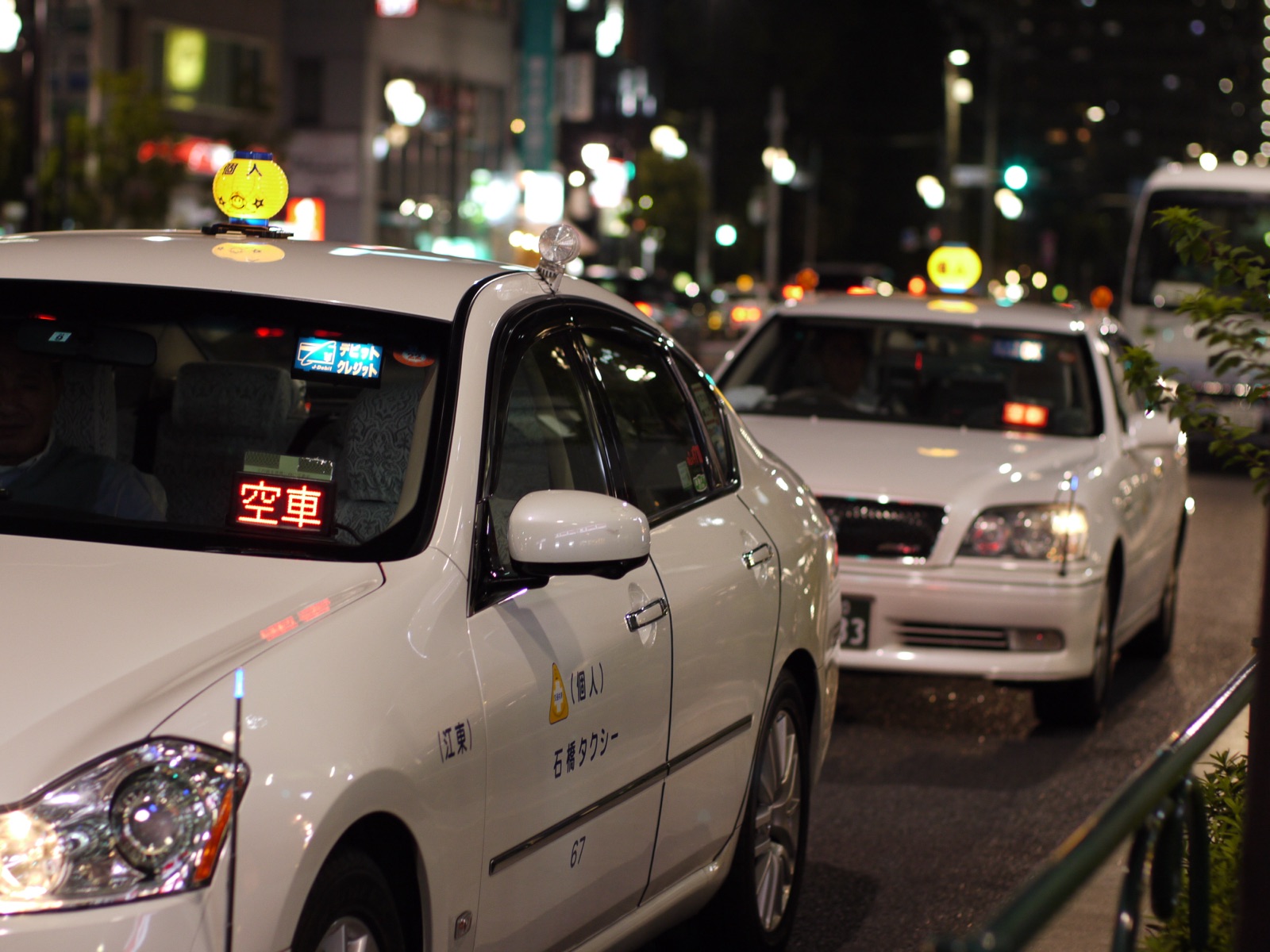

Taxis in Japan are safe, metered, cashless in every big city, and the doors open automatically — don't grab the handle, the driver does it from the front. A red light in the windshield means the taxi is empty (空車, kūsha); green means occupied. Fares start around ¥500–¥730 depending on the city and click up in ¥100 or ¥90 increments. There is no tipping — just pay the meter.
Two ride-hail apps dominate. Both are in English:
- GO — the market leader (~80% share), works in all 47 prefectures, dispatches licensed metered taxis. English UI, foreign credit cards, no surge outside busy hours. This is the default install. mobility.go
- DiDi Mobility Japan — second largest, English-friendly, strong in Tokyo, Osaka, Kyoto, Fukuoka, Sapporo, Okinawa. Coupons on first ride. didimobility.co.jp
- Uber works in Japan but is more limited — it dispatches licensed taxi drivers (not private cars) in central Tokyo, Osaka, Nagoya, Kyoto, Fukuoka, Sapporo and a handful of resort areas like Niseko and Okinawa. If you know Uber already, fine; otherwise install GO.
The one thing to know: at night in rural areas or small towns, taxis just aren't on the road. Have your ryokan call one, or take the last bus.
Renting a car: IDP, drive-on-the-left, ETC, and kei cars
Renting a car is the right call for Hokkaido road trips, the Noto peninsula, Shikoku pilgrimage loops, Okinawa, or anywhere off the rail grid. The train network is so good in Honshu's cities that you don't need a car for a Tokyo ↔ Kyoto trip. But the rules for driving as a foreigner catch a lot of people out.
Japan is a 1949 Geneva Convention country for driving-permit purposes — NOT the newer 1968 Vienna Convention. Which national licences that means need what:
| Your licence | What you need | Where to get it |
|---|---|---|
| 🇨🇦 CA / 🇺🇸 US / 🇬🇧 UK / 🇦🇺 AU / 🇳🇿 NZ + most others | 1949 Geneva IDP + home licence + passport | CAA / AAA / AA / your national auto club — before you fly. Physical booklet only, no digital. |
| 🇩🇪 DE / 🇫🇷 FR / 🇨🇭 CH / 🇧🇪 BE / 🇹🇼 TW / 🇲🇨 MC | Official JAF Japanese translation of your licence + home licence + passport | Order online from JAF, about ¥4,000 and 1–2 weeks. You can order after arrival too. |
| Everyone else | Cannot drive in Japan on a foreign licence | Must get a Japanese licence |
On the road, the essentials: drive on the left, steering wheel on the right, seat belts front and back, zero-tolerance for alcohol (0.03% blood limit and severe penalties — even one beer is a crime). Speed limits are low by North American standards: 40–60 km/h on surface roads, 80–100 km/h on expressways.
Two words to know: ETC and kei. ETC (Electronic Toll Collection) is the transponder card that gets you into the fast-lane at every toll plaza on the expressway network. Almost every rental car comes with an ETC card — ask at the counter, pay a flat rental fee, and never touch cash for tolls. Kei cars (軽自動車, yellow plates) are the small 660cc box cars that dominate Japanese roads — they rent cheaper, cost less at highway tolls, and are much easier to park on narrow rural streets. For two travellers with a couple of bags, a kei is genuinely fine.
Filling up: gas stations are self-serve (セルフ, serufu) or full-serve. On self-serve pumps, look for レギュラー (regular unleaded, red hose) and ハイオク (premium, yellow hose). Diesel is 軽油 (green). Some pumps are prepay-only via a touchscreen — select amount, insert card, pump.
Japanese phrases that will quietly upgrade your trip
You don't need to speak Japanese to travel Japan. But a handful of phrases — delivered with a small bow — noticeably change how people treat you. Here are the ones with the highest return.
“Excuse me / sorry / thank you” — the single most useful word in Japan — flag a waiter, apologise for bumping someone, thank someone for holding a door
“Thank you (polite)” — say this to shop staff, taxi drivers, ryokan hosts — the fuller form beats a casual arigatō with strangers
“Please / please do this for me” — ordering, asking for the bill, handing over money on the bus — universal politeness closer
“Do you have an English menu?” — pretty much every restaurant catering to tourists has one hidden under the counter
“This one, please” — point at the picture / plastic food model / menu item — universal ordering hack
“The bill, please” — in most restaurants you actually take the bill to the register at the door — but this still works if you can't find it
“Where is the toilet?” — answered with a point 90% of the time — nod arigatō and go
“Where is the station?” — swap 駅 (eki) for whatever you're looking for — バス停 (basu-tei / bus stop), コンビニ (konbini)
“How much is it?” — at markets and small shops where prices aren't tagged
“Tax-free, please” — at the register with your passport if the store offers tourist tax-free — until Oct 2026. After Nov 1 2026 you claim at the airport instead
“It's okay / I'm fine / no thanks” — the polite decline — waiter offers extra rice, hotel offers you a taxi, someone offers help you don't need
“I don't understand” — honest and appreciated — followed by a smile, most people will slow down or grab a colleague
Cultural norms: the eight things that catch visitors out
- Don't tip. Not at restaurants, not in taxis, not at the ryokan, not with the tour guide. Leaving cash on the table is at best confusing, at worst offensive. Good service is the baseline.
- Shoes off. In every home, most ryokan, many temples, some restaurants (especially tatami-mat seating), and traditional-style shops. Watch for a step-up in the entrance (genkan) — that's the shoe line. Slippers are usually waiting. Toilets often have a second set of dedicated toilet slippers — put them on, take them off before you leave.
- Quiet on trains. No phone calls, no speakerphone, no loud conversation. Ringtones off, headphones on. This applies to the Shinkansen too.
- Carry your passport. Foreign visitors are legally required to have their passport on them at all times. A photocopy doesn't count. In practice you're almost never asked, but it's the law.
- No public trash cans. Japan removed most street bins in the 90s. You carry your garbage until you find a bin at a station, convenience store, or your hotel. This is why Japanese cities are so clean.
- Cash for temples and shrines. Entrance fees, ofuda charms, ema wooden plaques — all cash. Carry ¥1,000 notes and coins for these.
- Bathe before you soak. At an onsen or sentō, wash and rinse thoroughly at the shower stools before stepping into the communal bath. No swimsuits. Small tourist towel goes on your head, not in the water.
- Tattoos and onsen. Many onsen still refuse guests with visible tattoos — the association is with organised crime, not aesthetics. Options: cover with a waterproof bandage (some onsen accept, some don't), book a private (kashikiri) bath, or search “tattoo friendly onsen” before you go — the list is growing.
Konbini, vending machines, coin lockers — the little Japan experience
These are the daily-use systems that make Japan feel unusually functional — and they save first-time visitors a ton of money and stress.
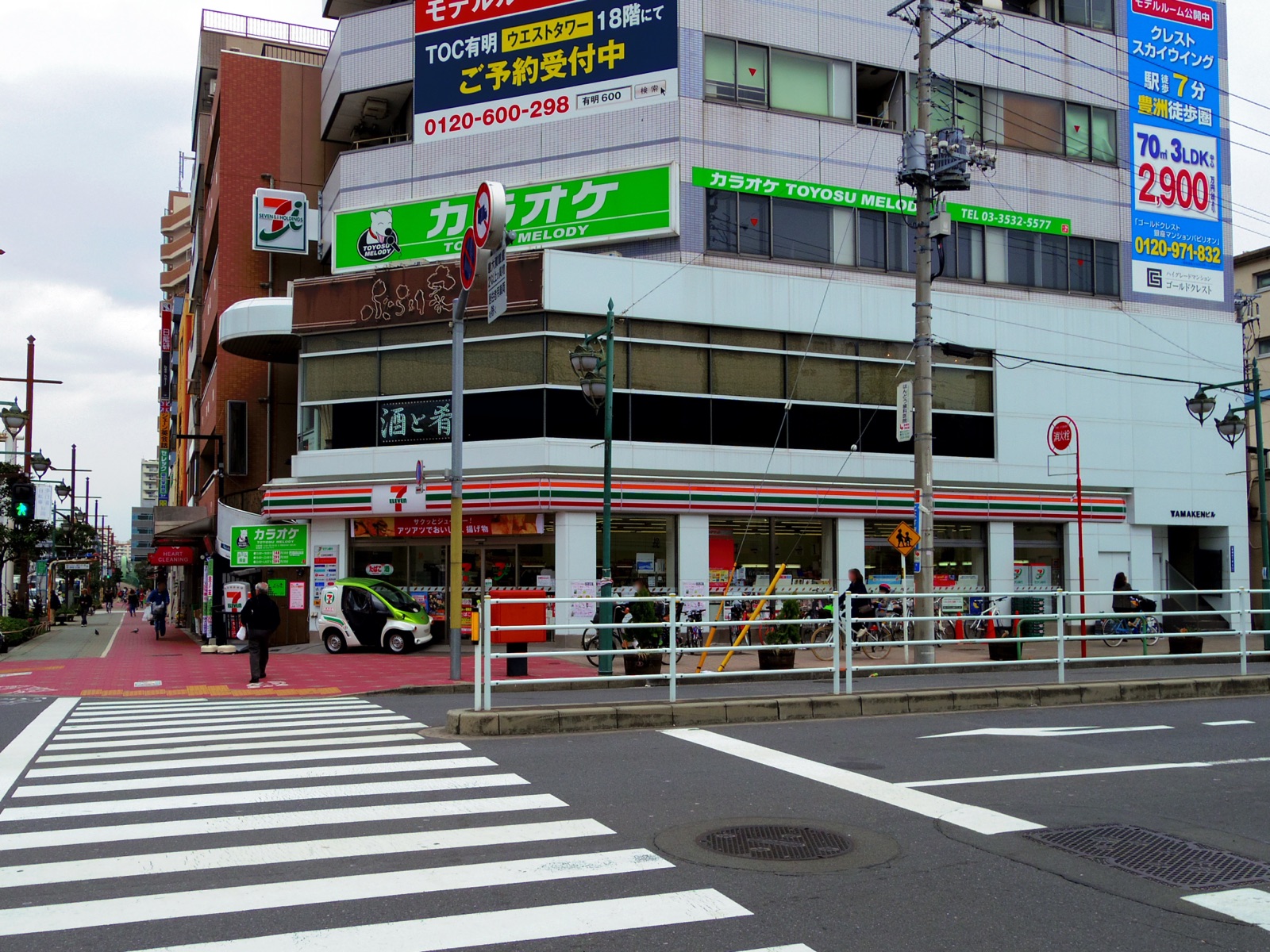

Konbini (コンビニ). 7-Eleven, FamilyMart, Lawson — 55,000+ stores across the country, most open 24/7. You can eat well from a konbini for ¥500 (onigiri + hot coffee + fried chicken). You can also pay bills, print concert tickets, pick up an Amazon order, withdraw yen from the ATM, top up your Suica, buy underwear if your bag didn't arrive, and use spotless free toilets. If you doubt this, stop by 7-Eleven at 3am and eat the egg salad sandwich.
.jpg)
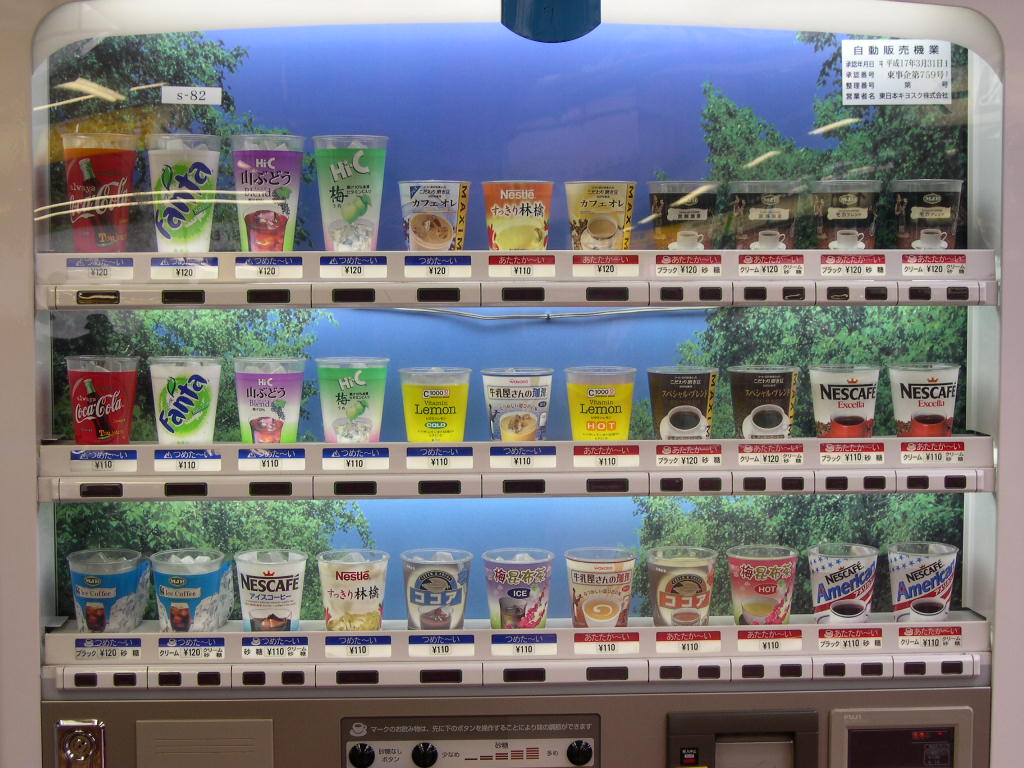
Vending machines (自動販売機). Roughly 4 million of them nationwide — you are rarely more than a block from a cold drink. Hot coffee in a can (labelled あたたかい, red band) is a real thing all winter. Accept IC card, coins, ¥1,000 notes.
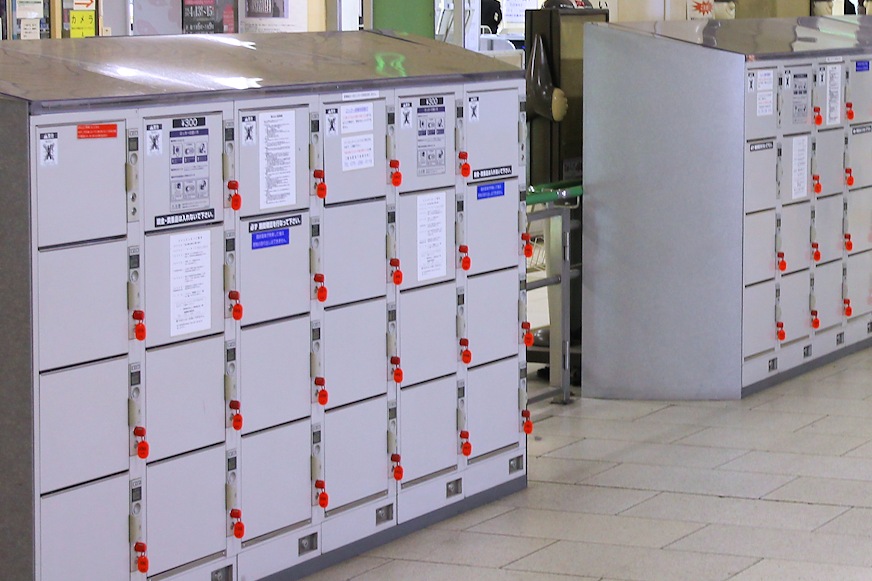

Coin lockers (コインロッカー). Every major station has a wall of them — small ¥300, medium ¥500, large ¥700-¥1,000, extra-large ¥1,000+. Newer ones take IC card and give you a receipt with a QR code. Perfect for dropping your suitcase on the day you arrive but can't check into your hotel yet. If they're all full, look for “ecbo cloak” — app-based storage in nearby shops.
Toilets. Even the free public ones are clean. Look for the small control panel: ossen (音姫) plays a flushing sound to mask other noise, big button flushes, blue button is bidet, red button is emergency (呼出) — don't press it by accident. If it's winter and the seat is heated, that's not a mistake, that's intentional.
Staying connected: skip the roaming bill
Your home carrier's Japan roaming add-on runs C$12–15 or roughly US$10 per day — for a two-week trip that's $150+ just to look at Google Maps. A Japan travel eSIM gets you the same NTT Docomo or SoftBank network for a few dollars total.
The setup that works best: install the Japan eSIM on Wi-Fi before you fly, keep your home SIM in the phone with roaming off so your number still gets SMS two-factor codes, and set the eSIM as your data line. Land, walk out of the airport, Google Maps already knows where you are. Related reads:
- Best Japan eSIM 2026 — buying guide
- Japan eSIM vs home carrier roaming
- Tourist Pasmo card in Apple Wallet
- Japan travel guide for Canadians (short version)
FAQ
QDo I need a visa to visit Japan in 2026?
AFor short-term tourism, citizens of 74 countries and regions can enter Japan visa-free — including Canada, the US, the UK, Australia, and all EU/Schengen countries — for stays of up to 90 days. The full list is maintained by Japan's Ministry of Foreign Affairs (MOFA) and was last updated September 1, 2025. Japan's electronic pre-screening system, JESTA, was passed into law on May 29, 2026 with a target launch in fiscal 2028; it is not live yet.
QWhat is the 整理券 (seiri-ken) on Japanese buses?
A整理券 (seiri-ken) is a numbered paper ticket you take from a small orange dispenser next to the rear door when you board a distance-based bus outside the big city flat-fare zones. The number matches a column on the fare screen at the front of the bus that updates as you travel; when you get off, you drop the ticket and the correct fare into the fare box next to the driver. If you tap an IC card on the reader at both doors, you can skip the paper ticket entirely.
QDo I need cash in Japan, or is it now a cashless country?
ABring some cash. Japan has moved rapidly toward cashless — every convenience store, most restaurants in cities, all taxis in major metros, and every JR station now accept cards or IC cards or PayPay QR — but rural buses, small ryokan, shrines, festivals, and older restaurants are still cash-only. A useful baseline is ¥10,000–20,000 in yen in your wallet, then use an IC card (Suica/Pasmo/ICOCA) or PayPay for everything else.
QCan I use my home driving licence to rent a car in Japan?
ACanadians, Americans, Brits, Australians, New Zealanders, and most other visitors need an International Driving Permit (IDP) issued under the 1949 Geneva Convention — get it before you fly, from your national auto club, and bring the physical booklet plus your home licence and passport. Germany, France, Switzerland, Belgium, Taiwan, and Monaco are NOT accepted under the 1949 IDP and instead need an official Japanese translation of the home licence from JAF (Japan Automobile Federation), which takes about a week and costs around ¥4,000.
QShould I tip in Japan?
ANo. Tipping is not customary in Japan and can cause confusion — taxis, restaurants, hotels, tour guides, none of them expect it. Good service is standard and already priced in. The 10% consumption tax is usually included on the tag; a polite arigatō gozaimasu is the whole custom.
QWhat's the cheapest way to get mobile data as a tourist?
AA Japan travel eSIM installed on your unlocked phone runs on NTT Docomo or SoftBank for a fraction of the C$12–15 / US$10 per day most home carriers charge for a roaming pass. Install it on Wi-Fi before you fly, set it as your data line, and keep your home SIM active for calls and two-factor codes. Pocket Wi-Fi still exists but is another device to carry and charge.
Photo credits
In-post photos are used under their respective Creative Commons or Public Domain licences. Full source pages are linked in each caption.
- 整理券 dispenser — 福鉄モ800, CC BY-SA 4.0.
- Kanachu bus fare box — Toshinori baba, CC0.
- Suica tap at gate — タチヤマカムイ, CC BY-SA 4.0.
- E7 Shinkansen at Ōmiya — Rsa, CC BY-SA 3.0.
- Tokyo taxi with 空車 light — Hajime Nagahata, CC BY 2.0.
- 7-Eleven Toyosu storefront — LERK, CC BY-SA 3.0.
- Vending machines — Schellack, Public domain.
- Kyoto Station coin lockers — Marek Ślusarczyk (Tupungato), CC BY 3.0.
Bottom line
Japan rewards a small amount of preparation with an outsized amount of ease. Before you fly: confirm you don't need a visa on MOFA, load a Welcome Suica or add Suica to Apple / Google Wallet, install GO and DiDi, and set up a Japan eSIM so your phone is online before you leave the arrivals hall. On the ground: don't tip, take the paper 整理券 from the orange box when you board a distance-fare bus, use 7-Eleven ATMs when you need cash, and say sumimasen a lot. Everything else works out.
Originally published on www.yonosim.com/en/blog/japan-travel-guide-2026 · YonoSIM — You Only Need One SIM