
Singapore Travel Guide 2026: Visas, SGAC, Hawker Chope, SimplyGo MRT, Taxis & Phrases
The one Singapore travel guide that actually shows you the tissue-packet chope ritual at hawker centres, whether you need the SG Arrival Card (almost certainly, and before you fly), how to tap your foreign credit card on the MRT with SimplyGo, how to order kopi and take a Grab, and the Singlish phrases that make the trip smoother.

Published July 27, 2026·20 min read
30-day auto-refund on no usageSummary
A deep-dive Singapore travel guide for 2026 — the one that actually shows you the tissue-packet chope ritual at hawker centres, whether you need the SG Arrival Card (almost certainly — and before you fly, not after you land), how to tap any foreign contactless credit card on the MRT with SimplyGo, how to order kopi at the coffee stall, and the Singlish phrases that quietly upgrade the trip. Cross-checked against ICA Singapore, SimplyGo, and Singapore Customs (TRS).

Do you need a visa? (dated, by country)
Singapore runs its own immigration. Most Western passport holders enter visa-free for 30 or 90 days, get a landing stamp at Changi, and are on their way. The list is maintained by ICA Singapore. But note: nearly everyone who clears Singapore immigration needs to submit a free SG Arrival Card (SGAC) online in the three days before arrival — the day of arrival counts, so an arrival on 30 June can file from 28 June — whether visa-free or not. Fill it at eservices.ica.gov.sg/sgarrivalcard — takes 60 seconds. Skip it and ICA makes you submit it on arrival before you can proceed to immigration clearance, which is exactly the queue you were trying to avoid.
| Nationality | Visa needed? | Max stay | Notes |
|---|---|---|---|
| 🇨🇦 Canada | No | 90 days | Plus SGAC required |
| 🇺🇸 United States | No | 90 days | Plus SGAC required |
| 🇬🇧 United Kingdom | No | 90 days | Plus SGAC required |
| 🇦🇺 Australia | No | 90 days | Plus SGAC required |
| 🇳🇿 New Zealand | No | 90 days | Plus SGAC required |
| 🇩🇪 Germany | No | 90 days | All Schengen visa-exempt countries treated the same |
| 🇫🇷 France | No | 90 days | Plus SGAC required |
| 🇯🇵 Japan | No | 90 days | Plus SGAC required |
| 🇰🇷 South Korea | No | 90 days | Plus SGAC required |
| 🇹🇼 Taiwan | No | 30 days | Visa-free tourism / business + SGAC |
| 🇭🇰 Hong Kong (SAR) | No | 30 days | HKSAR passport + SGAC |
| 🇨🇳 Mainland China | No | 30 days | Mutual 30-day visa-free since Feb 2024 — verify at ICA |
| 🇮🇳 India | e-Visa | Per visa | Apply online via ICA authorised agents |
| 🇵🇭 Philippines | No | 30 days | Visa-free tourism + SGAC |
Source: ICA Singapore. Verify at ica.gov.sg before you book.
SG Arrival Card — free, mandatory, 60 seconds
If you are clearing Singapore immigration as a visitor, you must submit the free digital SG Arrival Card in the three days before you arrive — the day of arrival counts, so an arrival on 30 June can file from 28 June. Fill it on your phone at eservices.ica.gov.sg/sgarrivalcard or in the “MyICA Mobile” app. It replaces the old paper form and includes a health declaration; you get an acknowledgement email, and no printout is needed.
The exceptions are narrower than most guides say. ICA's rule lists exactly two: travellers transiting or transferring through Singapore without seeking immigration clearance — you stay airside and never reach a counter — and residents (Singapore citizens, PRs and Long-Term Pass holders) arriving through Woodlands or Tuas Checkpoints. A diplomatic passport is not on that list. Miss the filing and ICA makes you submit it on arrival before you can proceed to immigration clearance.
Money: card, PayNow, and the almost-total absence of cash
Singapore runs on the Singapore dollar (SGD, S$). It is one of the most cashless cities on earth — more so than Tokyo or London. Effectively every restaurant, MRT gate, taxi, Grab ride, retail chain and hotel accepts a contactless credit card or Apple Pay / Google Pay. Locals default to PayNow (bank-linked QR) for peer transfers and small merchants including many hawker stalls. A useful cash baseline is S$50-100 for the odd older stall or temple donation.
| Payment method | Where it works | Tourist tips |
|---|---|---|
| Foreign contactless card (SimplyGo) | MRT, LRT, all public buses, plus everywhere a credit card normally works | The best single tool. Just tap. Visa / MC / Amex / UnionPay all supported. |
| Apple Pay / Google Pay | Same as above — wallet-based tap for MRT / bus / retail | Set a default card in Wallet and go. |
| EZ-Link / Nets FlashPay | Same MRT / bus system + 7-Eleven / FairPrice | Skip unless you specifically want a physical local card. Buy at any MRT TransitLink office if you do. |
| PayNow QR | Hawker stalls, small merchants, peer-to-peer transfers | Requires a Singapore bank account — skip as a short-term tourist. Alipay+ and WeChat Pay increasingly work at merchants too. |
| Cash (S$) | Some older hawker stalls, temples, night markets, tiny neighbourhood shops | Withdraw at DBS / POSB / UOB / OCBC ATMs. Airport ATMs work with foreign cards. |
Tax refund — 9% GST back at the airport
Foreign tourists get a 9% GST refund on eligible purchases of S$100+ per store per day, at any store displaying the Tourist Refund Scheme (TRS) sticker. Present passport at checkout, receive an eTRS ticket / receipt, then scan at a Changi TRS self-help kiosk after immigration but before boarding. Refund arrives on your card in 10 days, or as cash at a Central Refund Counter for a small fee. Show unopened purchases if requested.
MRT, LRT and buses: just tap any card with SimplyGo
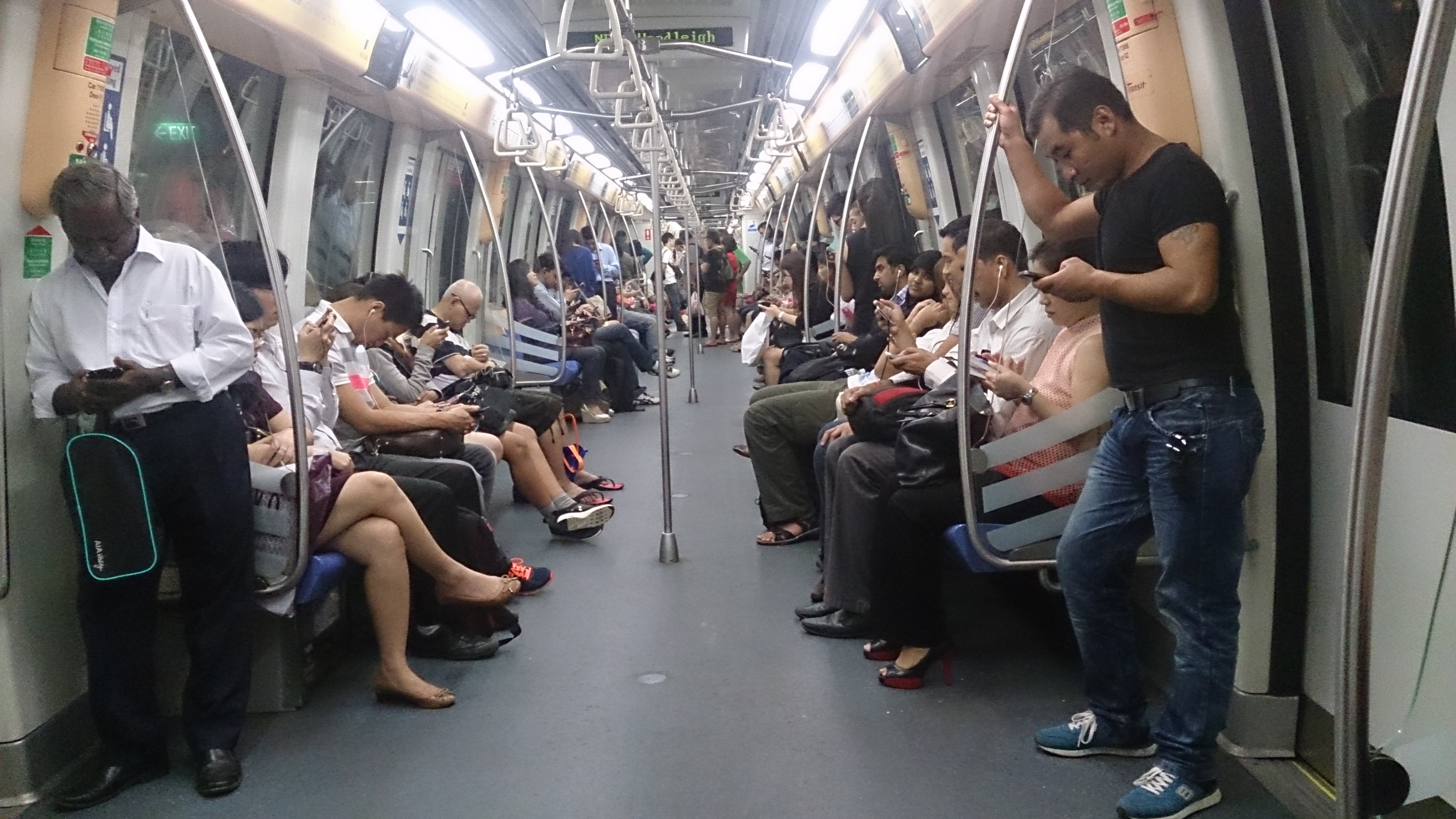

Singapore's MRT is the backbone — six lines including the Downtown, Circle, North-South, East-West, North-East and Thomson-East Coast lines, plus the LRT feeder systems in the newer housing estates. Runs from about 05:30 to midnight, trains every 2-3 minutes at peak. Fare is distance-based, roughly S$1-3 per ride, capped at S$2.85 per trip during weekdays. Buses run parallel and are integrated into the same fare system.


The trick that saves every tourist money: since 2019, Singapore's fare gates accept any foreign Visa, Mastercard, American Express or China UnionPay contactless card via the SimplyGo system. Same reader, same distance fare, same integrated MRT-plus-bus discount as an EZ-Link. Apple Pay and Google Pay work the same way. You do NOT need to buy a local card. Just tap.
Fares are batched to your card overnight — you'll see a single day-total charge, not one per ride. If you want to see per-ride breakdowns, register your card in the SimplyGo app (free, English) or check on any TransitLink Passenger Service kiosk.
Hawker centres and the chope ritual
Singapore's food scene lives at the hawker centres — UNESCO-recognised communal food halls where you can eat a Michelin-listed meal for S$5. Every neighbourhood has one; the famous ones for tourists are Maxwell Food Centre (chicken rice), Old Airport Road Food Centre (variety), Chinatown Complex (largest), Tiong Bahru Market (breakfast), and Lau Pa Sat (satay street at night).


The one ritual every tourist has to learn: the chope. Hawker centres run on a counter-service model — you order at the stall, pay, wait for your number, and carry the food back to any communal table. But the queues at the popular stalls can take 15-30 minutes, so you reserve a seat first, then go queue. The way you reserve, without a stranger stealing it, is to leave something obviously personal on the seat:
The universally accepted chope objects, in order of local preference:
- A small packet of tissues. The classic. Costs 30 cents at any 7-Eleven or vending machine. Locals buy them by the pack precisely for this. Bonus: you use them at the table when you're back with the food.
- An umbrella. If it's a rainy afternoon. Slightly higher trust level.
- A business card or a name card. Slightly formal but works.
- A small bottle of water. Works in a pinch. Don't use anything valuable — chope conventions honour the marker but not the wallet next to it.
Do NOT chope with a phone, keys, backpack, sunglasses, or laptop. Locals universally honour the tissue-packet convention because the object is worth nothing. Anything with real value invites theft, and you have no complaint.
Ordering flow: chope a seat with tissues → walk to the stall, look at the overhead pictures or the aunty's pointing finger, order + pay in cash or PayNow → wait for your number/pager → collect and carry back to your seat. If you take too long, the tissues still hold your seat — but somebody may politely double-up if the centre is full at peak times.
Taxis, Grab, and Gojek

_ComfortDelgro_Taxi_SHD8591S_2024-01-21.jpg)
Singapore has three overlapping ride options — regular metered taxis, ride-hail apps, and the fully cashless / SimplyGo public transit above. Doors are manual. There is no tipping. Meters run the same fare formula across taxi operators. Popular operators & apps:
- Grab — the dominant ride-hail app (Uber sold its SEA business to Grab in 2018). English UI, foreign credit cards accepted, no surge outside peak. Also does food delivery (GrabFood) and payments (GrabPay). This is the default install. grab.com/sg
- Gojek — the Indonesian challenger. Competitive fares, sometimes fewer drivers than Grab. English UI, foreign card accepted.
- ComfortDelGro — the biggest taxi operator (blue and yellow cabs). Their own booking app plus street hail. Metered fares only.
- Zig by ComfortDelGro / TADA / Ryde — smaller players. Skip unless Grab surge is annoying you at 11pm on a Friday.
Taxis have surcharges that catch tourists: airport pickup (S$5-8), midnight (50% on the meter 00:00-06:00), peak-hour (25%), and CBD entry (S$3). Grab shows all of this transparently in the upfront fare quote.
Renting a car: expensive and rarely worth it
Singapore is 728 km² — the whole country is smaller than metro Toronto. Owning a car is aggressively discouraged: a Certificate of Entitlement (COE) to own one vehicle for 10 years runs S$70,000-100,000+ on top of the car itself, and daytime CBD entry is metered by an overhead ERP (Electronic Road Pricing) gantry system.
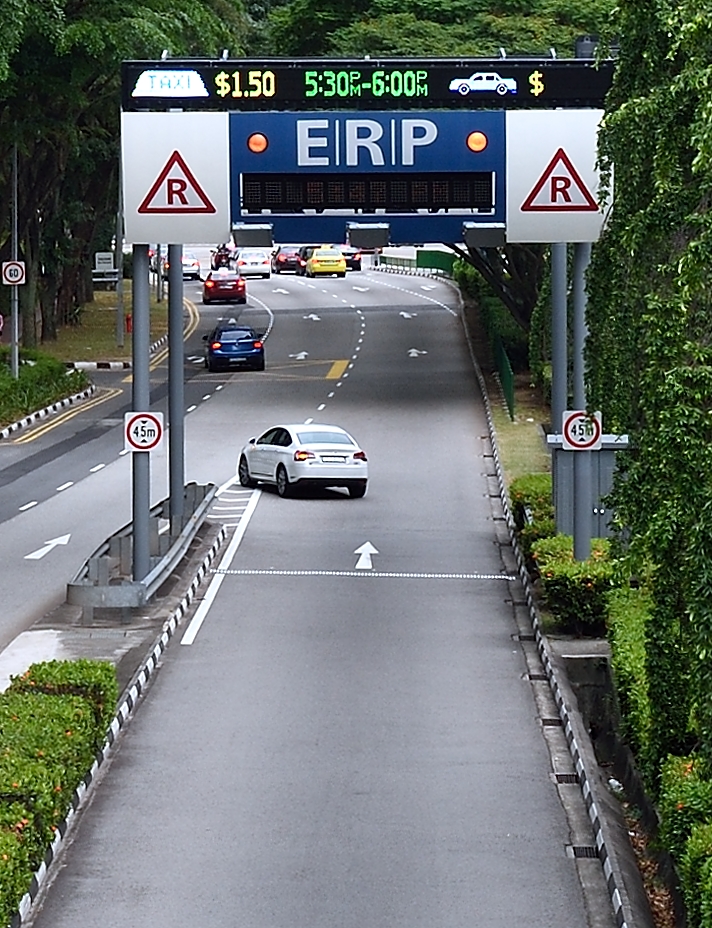

For tourists, renting is almost never the answer — the MRT plus Grab plus the occasional taxi covers everything for a fraction of the cost. If you do rent (usually for a Malaysia road trip across the causeway), rules:
- 1949 Geneva IDP + home licence + passport for most Western nationalities.
- Left-hand traffic, RHD car (like UK, Japan, Australia). Common source of error for continental European and North American drivers.
- ERP gantries and in-vehicle unit — every rental car has an IU (in-vehicle unit) with a cash-card slot; ERP fees debit as you drive through. Ask at the counter for a topped-up card.
- Cross-border to Malaysia — permitted with the right insurance rider, which most rental agencies can add for a fee. Bring VEP registration if going into Johor. Confirm at the counter.
Singlish, kopi and phrases that upgrade your trip
Singapore has four official languages: English, Mandarin, Malay, and Tamil. English is universal — you don't need anything else. But locals speak Singlish (English with Chinese / Malay / Tamil loanwords and its own grammar), and knowing a handful of Singlish, kopi-order terms and Malay/Chinese phrases makes the trip noticeably more fun.
“To reserve (a seat) by placing an object on it” — the whole hawker-centre ritual explained above — the tissue packet is the classic chope
“Take away / to go” — ordering at any hawker stall or coffee shop — 'chicken rice, ta pau' means 'chicken rice to go'
“Coffee with condensed milk + sugar (default)” — the default kopitiam order — say 'kopi' and you get sweet, condensed-milk coffee
“Coffee with evaporated milk + sugar” — lighter than default kopi — evap milk instead of condensed
“Black coffee with sugar” — you want black — but note the default is still with sugar; say 'kopi O kosong' for zero sugar
“Toast with coconut-egg jam” — the classic Singaporean breakfast — order at any old-school kopitiam with a soft-boiled egg on the side
“Excellent / delicious / great” — say it once about the char kway teow and watch the auntie beam
“Oh no / oops” — mild exclamation when something goes wrong — 'alamak, I forgot my umbrella'
“(sentence-ender for emphasis)” — attaches to the end of a sentence: 'okay lah', 'can lah', 'like that lah' — softens or emphasises the meaning
“Yes / No” — 'can we sit here?' → 'can, can' (yes) or 'cannot lah, already chope-d' (no) — universal
“Older man / older woman (used politely)” — polite address to a hawker-stall owner, taxi driver, or older shopkeeper — respectful, not familiar
“Thank you” — works at Malay food stalls, Malay taxi drivers, and shows a bit of local courtesy — 'thank you' also works everywhere
Cultural norms: the eight things that catch visitors out
- Chewing gum is banned. Import and sale is illegal (except therapeutic nicotine gum sold by pharmacies). Bringing a personal amount for your own use is a grey area; spitting gum on the street is a fine. Just don't.
- No eating, drinking, smoking or durian on the MRT. All fined. The durian rule has its own pictogram at the entrance. Finish before you tap in.
- Don't tip. 10% service is added at restaurants. Grab drivers and taxis don't expect it. Hawker centres certainly don't.
- Queue rigorously. Singaporeans queue for everything — MRT platform doors, taxi ranks, popular hawker stalls, escalators. Cutting is deeply un-Singaporean.
- Priority seats. The dark blue seats near MRT doors are for elderly, pregnant, and disabled riders. If you're not one, be ready to give it up on request.
- Handshake and slight bow / nod. Culturally mixed — Chinese, Malay, Indian, Peranakan norms all present. Two hands for business cards. Firm but not aggressive handshake.
- Shoes off in temples and homes. Singapore has hundreds of temples across the four main religions — each has a shoe rack at the door. Follow suit.
- Jaywalking is fined. Cross at the pedestrian light or the marked zebra crossing. Especially near police-heavy zones (Marina Bay, Orchard Road).
Merlion, temples, and the little Singapore experience
Singapore packs a lot into a small footprint. A short list of the daily-use spots that don't appear in the guidebook top-ten:

.jpg)
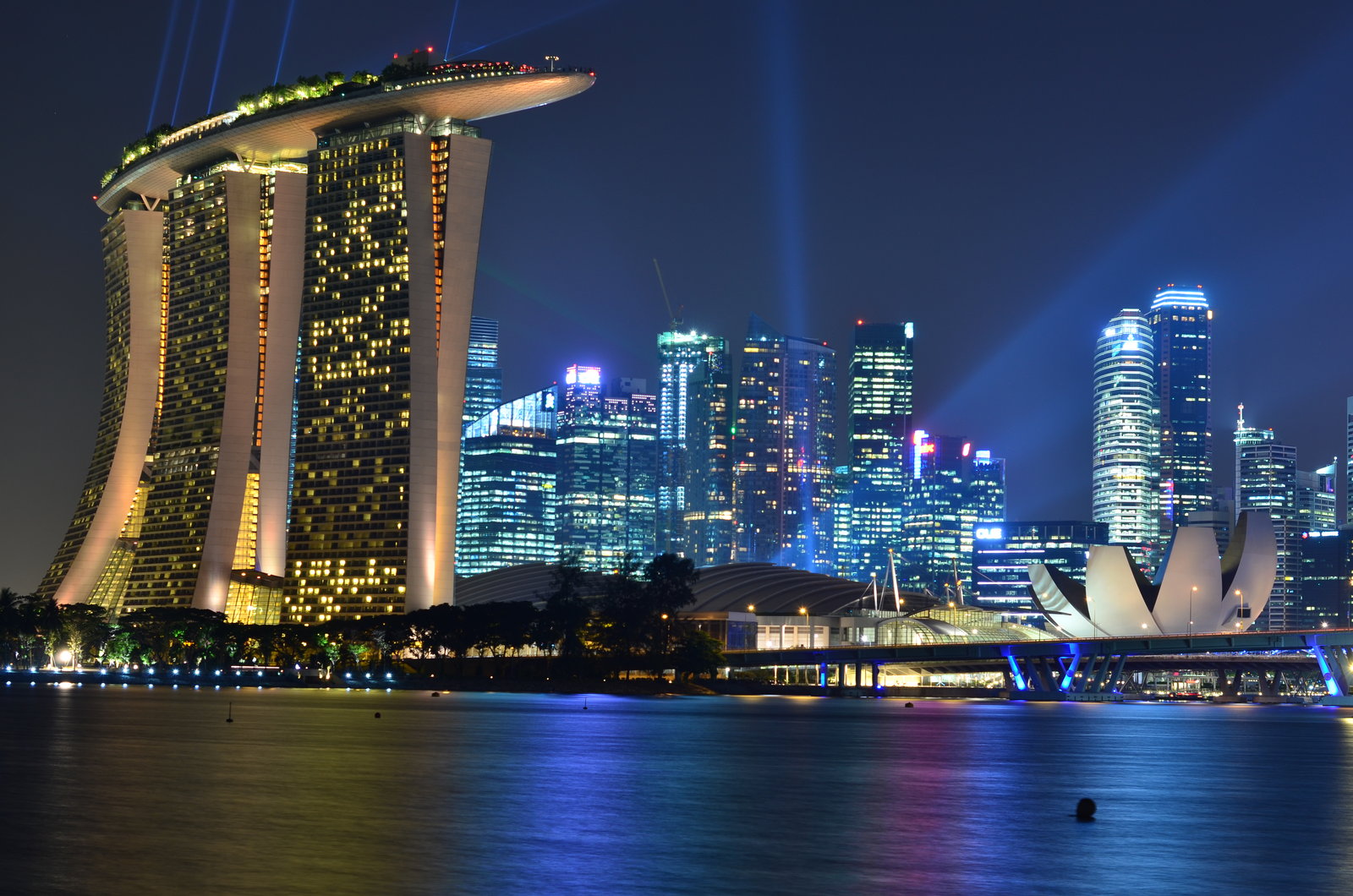
Merlion Park. The obligatory tourist photo. Free, always open, MRT to Raffles Place then walk 5 minutes. The best light is just after sunset when Marina Bay Sands turns on.
Kopitiam breakfast at Ya Kun / Toast Box / Killiney. Kaya toast + soft-boiled eggs + kopi C for under S$7. The default Singaporean breakfast; every neighbourhood has one. Soft-boiled eggs come in a saucer; pour soy sauce and white pepper, dip the toast.
7-Eleven, Cheers, FairPrice Express. Chain convenience stores. Not as food-heavy as Japanese konbini, but every one has cold drinks, snacks, umbrellas, EZ-Link top-up, and a working ATM. Cheers is DFI Retail (parent of Cold Storage / Guardian); FairPrice Express is NTUC.
Public toilets. Ubiquitous, clean, free at every MRT station and shopping centre. Water-hose sprayers next to the toilet are common — also known as bum-guns.
Staying connected: skip the roaming bill
Your home carrier's Singapore roaming add-on runs C$12-15 or roughly US$10 per day — for a four-day layover that's $60+ just to open Grab. A Singapore travel eSIM gets you StarHub — the same island-wide 5G a resident uses — for a few dollars total.
The setup that works best: install the Singapore eSIM on Wi-Fi before you fly, keep your home SIM in the phone with roaming off so your number still receives SMS two-factor codes, and set the eSIM as your data line. Land at Changi, clear immigration with the SGAC pre-filled, Google Maps already knows where you are. Related reads:
- Best Singapore eSIM 2026 — buying guide
- Taiwan Travel Guide 2026 (companion post)
- Hong Kong Travel Guide 2026 (companion post)
- Japan Travel Guide 2026 (companion post)
FAQ
QDo I need a visa to visit Singapore in 2026?
AFor short-term tourism, citizens of most Western countries can enter Singapore visa-free — Canada, the United States, the United Kingdom, Australia, New Zealand, Japan, Korea and most Schengen countries for up to 90 days. Chinese passport holders now enjoy 30-day visa-free entry under the 2024 mutual agreement. Indian, Philippines and a few other passport holders can apply for an e-Visa online. In addition, almost everyone clearing Singapore immigration must submit a free SG Arrival Card at ica.gov.sg in the three days before arrival — the day of arrival counts, so an arrival on 30 June can file from 28 June. ICA lists only two exceptions: travellers transiting or transferring through Singapore without seeking immigration clearance, and residents (Singapore citizens, PRs and Long-Term Pass holders) arriving through Woodlands or Tuas Checkpoints. The card is not a visa, it's a mandatory digital arrival declaration.
QDo I need the SG Arrival Card if I am only transiting through Changi?
AOnly if you clear immigration. ICA exempts travellers transiting or transferring through Singapore without seeking immigration clearance — so a pure airside connection, where you walk from one gate to the next and never reach a counter, needs no SG Arrival Card. The moment you pass through immigration you are no longer exempt: a long layover where you leave the airport for Marina Bay or a hotel, or an overnight stopover on a visa-free entry stamp, needs the card like any other arrival. Submit it in the three days before you land. If your plans are undecided, file it anyway — it is free, takes 60 seconds, and costs nothing if you end up staying airside.
QWhat is 'chope' at a hawker centre?
AChope (from the English 'chop' meaning to stake a claim) is Singapore's uniquely civilised system for reserving a seat at a busy hawker centre while you queue at a stall to order. You leave a small item on the seat or table — most commonly a packet of tissues, but also an umbrella, a business card, or a name card — as a visible marker that the seat is taken. Locals honour it: nobody sits down at a chope'd table. The tissue packet is preferred because it's cheap, obviously not accidentally left behind, and useful once you're back with your food.
QDo I need an EZ-Link card in Singapore?
ANo. Since 2019, Singapore's MRT, LRT and public buses accept any foreign contactless Visa, Mastercard, American Express or China UnionPay card at the fare gate — no top-up, no registration, just tap. This is called SimplyGo. Apple Pay and Google Pay work the same way. Fare is auto-calculated and billed to your card in a batch (usually the next day). Locals still use EZ-Link or Nets FlashPay because there are edge-case discounts for concession users; tourists rarely need one. If you do want a physical card, buy a tourist EZ-Link at any MRT TransitLink Ticket Office.
QDo I need cash in Singapore?
AVery little. Singapore is one of the most cashless cities on earth — every restaurant, retail chain, taxi, MRT and Grab ride takes cards or PayNow. Even most hawker centre stalls now accept PayNow QR (locals' bank-based payment) or Nets contactless. A useful cash baseline is S$50-100 for the odd older hawker stall, temple donation, or small night market. Withdraw at any DBS, POSB, UOB or OCBC ATM — airport ATMs accept foreign cards.
QShould I tip in Singapore?
ANo. Restaurants add a 10% service charge and 9% GST to the bill automatically — nothing more is expected. Taxis and Grab drivers do not expect a tip; rounding up S$1-2 is common but not required. Hotel porters and concierges appreciate S$2-5 for real help. At hawker centres, there is no tipping at all. Excess service is politely declined.
QWhat's the cheapest way to get mobile data as a tourist in Singapore?
AA Singapore travel eSIM installed on your unlocked phone runs on StarHub for a fraction of the C$12-15 / US$10 per day most home carriers charge for a roaming pass. Install it on Wi-Fi before you fly, set it as your data line, and keep your home SIM active for SMS two-factor codes. Airport SIM booths at Changi still exist but an eSIM is set up before you land.
Photo credits
In-post photos are used under their respective Creative Commons or Public Domain licences. Full source pages are linked in each caption.
- Marina Bay Sands + CBD skyline at night — Nicolas Lannuzel, CC BY-SA 2.0.
- Inside a Singapore MRT carriage — ProjectManhattan, CC BY-SA 3.0.
- MRT fare gates at Little India — Pizza1016, Public domain.
- Maxwell Food Centre interior — Shoestring (Wikivoyage), CC BY-SA 1.0.
- ERP gantry over a Singapore expressway — Tim Adams, CC BY 2.0.
- The Merlion at Merlion Park — Bernard Spragg. NZ, CC0.
- ComfortDelGro blue taxi — S5A-0043, CC BY 4.0.
Bottom line
Singapore rewards a small amount of preparation with an outsized amount of ease. Before you fly: confirm your visa status at ica.gov.sg, submit the SG Arrival Card at eservices.ica.gov.sg, install Grab, and set up a Singapore eSIM so your phone is online before you leave Changi. On the ground: tap your foreign contactless card at MRT gates (no EZ-Link needed), buy a packet of tissues and chope your hawker seat before you queue, don't tip, and say shiok once about the char kway teow. Everything else works out.
Originally published on www.yonosim.com/en/blog/singapore-travel-guide-2026 · YonoSIM — You Only Need One SIM