
Why eSIMs Are Notoriously Hard to Refund (and How YonoSIM Fixed It)
The travel eSIM industry treats refunds as a customer-service friction because the underlying tech makes them awkward. Here's the technical reason unused eSIMs are hard to refund, why every provider defaults to support tickets, and how YonoSIM built the first automatic refund system.

Published July 25, 2026·7 min read
30-day auto-refund on no usageSummary
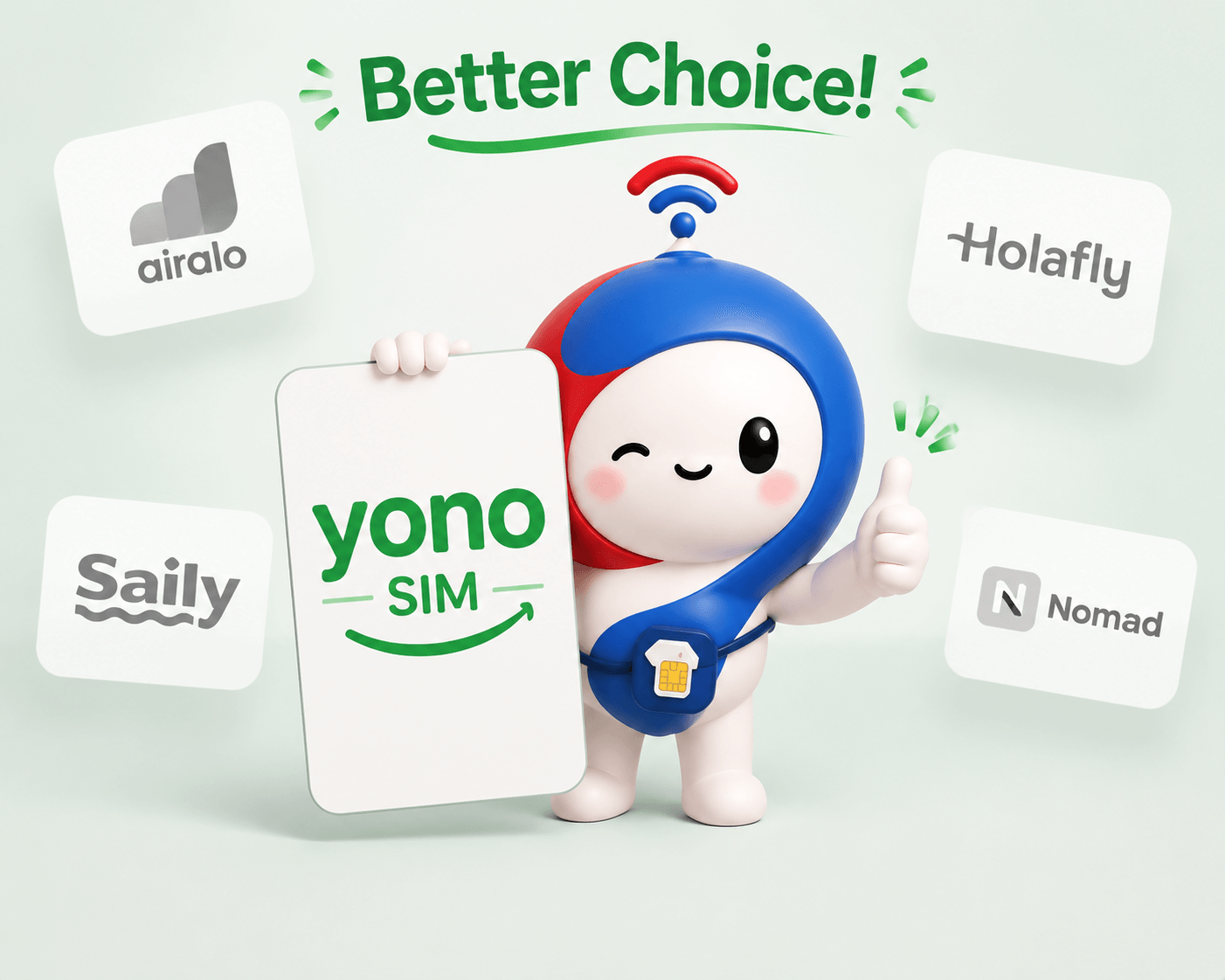
Every major travel eSIM store — Airalo, Holafly, Saily, Nomad — treats refunds as a customer-service friction. You have to notice, remember, open a support ticket or an in-app form, pick a reason from a drop-down, and wait days for a decision. That's not because they're trying to be difficult on purpose; it's because eSIMs are provisioned goods, not subscriptions, and the underlying wholesale mechanics make automatic refunds genuinely awkward to build. This is the technical explanation for why the industry defaults to friction — and how YonoSIM's 30-day automatic refund system works around it.
The first thing to understand: eSIMs are provisioned goods, not subscriptions
When you cancel a Netflix subscription mid-month, Netflix stops charging you next month. Nothing was pre-purchased on your behalf; no third party was involved. Cancellation is a database update.
When you buy a travel eSIM, the store immediately does two things:
- Reserves a data allowance with a network provider (the wholesale carrier that actually operates the SIM profile). The store's cost is locked in the moment provisioning succeeds — even if you never install the eSIM on your phone.
- Sends you a QR code or a direct install link that points at the profile. This isn't a placeholder; it's a real, live profile at the network level, and the store has already paid for it.
So an unused eSIM is not free to refund. The store has to first convince the network provider that the profile was never used, and then release the reservation, and only then can the store refund the customer without losing money on the transaction. That's three API calls and one wholesale accounting adjustment — none of it insurmountable, all of it different from a subscription cancellation.
What “unused” actually means (and why the definition matters)
The authoritative signal for whether an eSIM is refundable is the network provider's usage counter, not anything the store or the customer's device can see directly. That counter reads zero if and only if no data has been consumed against the profile at the wholesale level.
This creates an ugly edge case: a customer can install the eSIM on their phone, toggle data roaming on for a second, get a system-level background ping (iOS Push Notification Service, Google's FCM, an OS update check), and consume 2 KB. From the customer's perspective, they never “used” the eSIM. From the network provider's perspective, it's consumed.
Most eSIM stores solve this problem by making refunds conditional on the eSIM being unactivated — never installed on a device at all. That's a much stricter test than “no data consumed”, and it's the reason Airalo's refund window ends the moment you activate. YonoSIM went the other way and uses zero data consumed as the test, which requires us to actually query the network provider's usage counter every time — but which better matches what customers mean when they say “I never used it.”
Why the industry defaults to support-ticket walls
Given the wholesale mechanics above, there are two ways an eSIM store can handle refunds:
- Support-ticket wall. Force the customer to notice, remember, and file a request. Route the request through a support team that manually checks the usage counter, cancels the wholesale reservation, and issues the refund. Cheap to run because most customers won't bother, and every unclaimed refund is margin the store keeps.
- Automatic refund sweep. Run a scheduled job that checks the usage counter against every recent order, cancels unused reservations, and refunds cards without any customer involvement. Expensive to run because you refund every eligible order, including the ones the customer would have forgotten about.
The reason four out of five major eSIM stores use option 1 is not technical. Option 2 isn't hard to build — it's the same API calls the support team would make, wired to a cron job instead of a Zendesk ticket. It's a business decision about whether the margin from forgotten refunds is worth more than the customer trust from automating them.
How YonoSIM's automatic refund works
We built option 2. The mechanics, in five steps:
- Daily age filter: we look at Stripe-paid, provisioned plan orders whose purchase date is between 30 and 60 days ago (the 60-day back-catch absorbs any day the sweep skipped without extending the promise window).
- Canadian carve-out: we cross-reference each order's package against our catalogue and drop any plan whose coverage includes Canada — Canadian plans are final sale, disclosed at checkout in a pop-up.
- Authoritative usage check: we ask our network provider about the profile status. If they report any usage — even a background ping — we skip.
- Cancel first, then refund: we release the still-unused profile at the network level, which is the point where the wholesale cost returns to our balance, and only then refund the customer's card. Never refund before cancel — otherwise we'd be refunding eSIMs still considered consumable at the network level.
- Warm confirmation email: the customer gets a non-apologetic note that says “we noticed you didn't use the eSIM, we auto-refunded the full amount, no reply needed.” Card refunds land on the statement in 5–10 business days.
The engineering is boring on purpose. Every step is what a support agent would already do manually. The only novel thing is that a cron job is doing it, and the customer doesn't have to be the one who starts the process.
The three anxieties this design is meant to kill
Auto-refunding isn't a technical achievement, it's a bet about which anxieties the industry has been ignoring. Talk to anyone who's bought a travel eSIM for the first time and you hear the same three worries:
- “What if my phone isn't compatible and I only find out on the plane?” Most Android phones sold outside North America don't support eSIM at all; carrier-locked US phones are frequently locked out too.
- “What if I don't understand how eSIMs work well enough to install it correctly?” The biggest support topic in this industry is data roaming being off after install; the second-biggest is dual-SIM confusion.
- “What if my trip changes and I forgot I bought this?” Flights get cancelled, meetings get moved. An eSIM is small enough to fall out of your working memory the moment your itinerary changes.
Every one of those anxieties has the same shape: the customer paid, the eSIM sat unused, and getting the money back requires energy, English proficiency, and time. The industry counts on that friction. We built the sweep to remove it.
Related reading
- eSIM refund policies compared (2026): every major provider, side by side — the full comparison table across YonoSIM, Airalo, Holafly, Saily, Nomad.
- 30-day automatic no-usage refund: the eSIM promise nobody else makes — the flagship post on how the sweep works day-to-day.
- YonoSIM vs Airalo refund policy (2026)
- YonoSIM vs Holafly refund policy (2026)
- YonoSIM vs Saily refund policy (2026)
- YonoSIM vs Nomad refund policy (2026)
FAQ
QWhy can't eSIM providers just refund unused plans automatically like a subscription service?
ABecause eSIMs are provisioned goods, not subscriptions. When you buy an eSIM, the store immediately reserves a data allowance with a network provider (the wholesale carrier), and the store's cost is locked in the moment provisioning succeeds. Refunding means the store has to first prove to the network provider that the profile was never used — which requires a live usage check against the network — and then release the reservation before the money returns. Every step in that chain is a support-team task at most providers, which is why refunds default to tickets rather than automation.
QWhat does 'unused' actually mean for an eSIM?
AUnused means zero data consumption at the network provider level — not zero installation on your device, not zero download of the QR code. The authoritative signal is the network provider's usage counter for your eSIM profile. If the counter reads zero, the plan is refundable at wholesale; if the counter reads anything else — even a few megabytes from an accidental data-roaming toggle at the airport — the plan is considered consumed and the store's cost is sunk.
QWhy do so many eSIM stores make you pick a reason from a drop-down?
ATwo reasons, one technical, one commercial. Technical: the store's support team needs to know which internal process to run — a change-of-plans refund and a device-compatibility refund often go through different queues. Commercial: reason drop-downs let the store route certain reasons to store credit instead of cash back, and let them filter out customers who won't invest the effort to fill out a form. It's a soft way of preserving margin without publicly refusing refunds.
QHow does YonoSIM's automatic refund actually get around these problems?
AWe built a scheduled sweep that hits the same network-provider usage API our customer-initiated refund button uses. Every day, we filter Stripe-paid orders whose purchase date is between 30 and 60 days ago, drop any plans that cover Canada (our carve-out), then ask the network provider whether each remaining profile has consumed data. If the answer is zero, we release the profile at the network level (which returns the wholesale cost to our balance) and then refund the customer's card. The customer receives a warm confirmation email and never has to file anything. The engineering is not hard; the business decision to spend margin on it is what nobody else has made.
QWhy doesn't the rest of the eSIM industry do this?
ABecause support-ticket walls are cheaper than automatic refunds. Every unused eSIM that a customer forgets to request a refund on is margin the store keeps. Making the refund automatic converts all of those forgotten cases into actual cash outflows. It's a real cost, and only worth taking if you believe that earning the customer's next trip is more valuable than trapping their last dollar. We do. So far, we appear to be the only travel eSIM store that does.
Bottom line
eSIMs are hard to refund because the underlying tech makes the money flow through a wholesale reservation instead of a simple subscription toggle. That gives every eSIM store an excuse to route refunds through a support ticket — and most take it. The fix is not engineering, it's intent: build the sweep, spend the margin, earn the trust. If your device isn't compatible, your trip is cancelled, or you never figure out data roaming, we'd rather notice and give you your money back than count on you giving up.
Originally published on www.yonosim.com/en/blog/why-esims-are-hard-to-refund · YonoSIM — You Only Need One SIM