
What Is an eSIM and How Does It Work? The 2026 Explainer, From Chip to QR Code
An eSIM is a SIM card built into your phone as a 6 × 5 mm chip, loaded with a carrier profile over the internet instead of a tray. The GSMA defines it as a specification for remote SIM provisioning; the profile downloads from an SM-DP+ server when you scan a QR code. Every iPhone since 2018 has one, US iPhones have been eSIM-only since 2022, 605 million eSIMs shipped in 2025, and GSMA Intelligence expects eSIM to be 10% of smartphone connections by the end of 2026.

Published November 3, 2026·9 min read
30-day auto-refund on no usageSummary
An eSIM is a SIM card built into your phone as a tiny chip, with the carrier's subscription downloaded onto it over the internet instead of arriving on a plastic card. The GSMA, which wrote the standard, defines it as “a global specification which enables remote SIM provisioning of any mobile device.” You scan a QR code, the phone fetches the profile from a server called the SM-DP+, and from then on it behaves exactly as if that carrier's SIM were in the tray.
Every iPhone since the XS of 2018 has one, US iPhones have been eSIM-only since the iPhone 14 in 2022, and 605 million eSIMs shipped in 2025. For travel the point is timing: the plan is installed on home Wi-Fi before you leave and switched on at the arrival gate, while the home SIM stays in the tray for calls and bank codes.
What is an eSIM, in one paragraph
SIM stands for subscriber identity module: the small secure chip that proves to a mobile network who you are and which plan you have. For thirty years it came on a plastic card you pushed into a tray. An eSIM, short for embedded SIM, is the same secure chip soldered to the phone's circuit board at the factory, in a package about 6 by 5 millimetres called MFF2. Because nobody can swap the chip, the subscription has to arrive another way, and that is what the eSIM standard is really about: the GSMA's definition is a specification for remote SIM provisioning, which lets carriers write a profile onto the chip over the air. The chip is the eUICC (embedded universal integrated circuit card); the thing you buy is a profile.
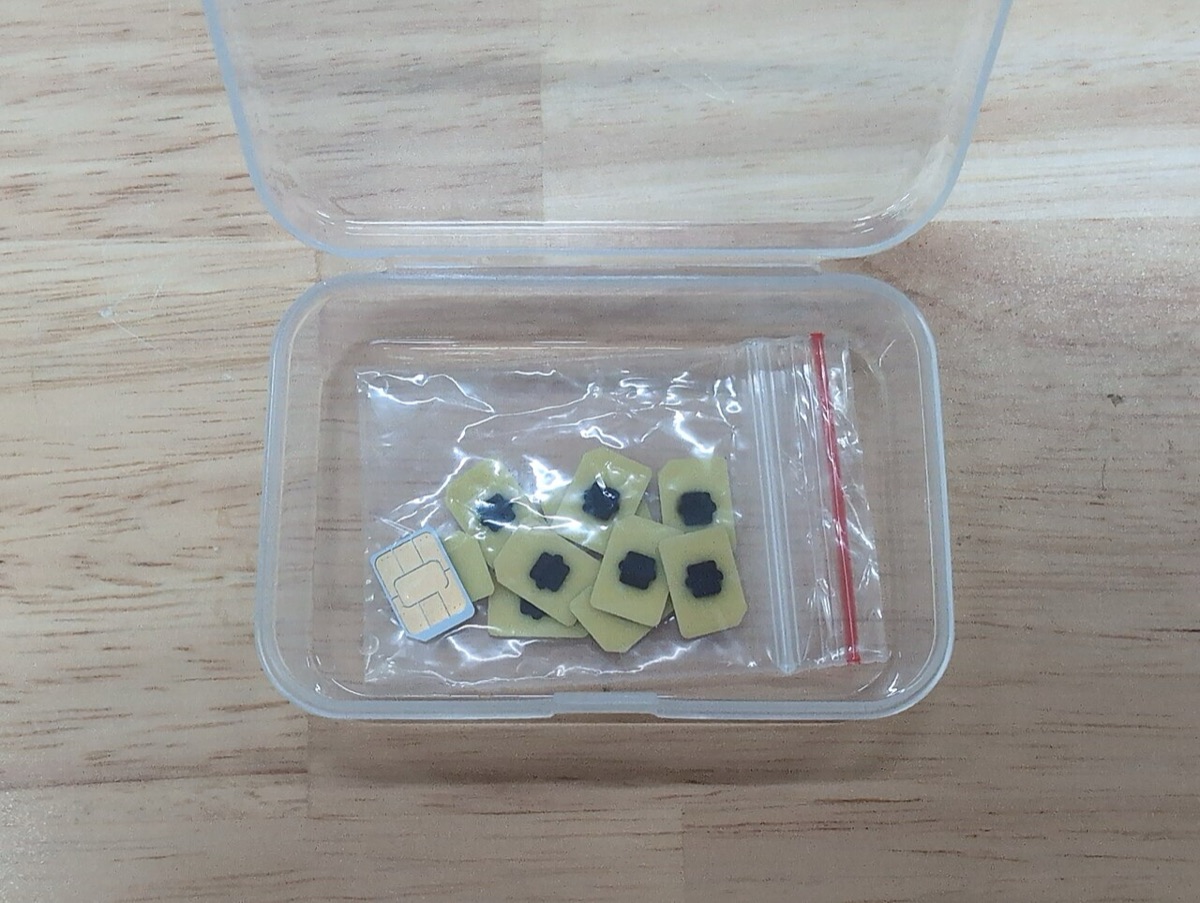

eSIM vs physical SIM
| Physical SIM | eSIM | |
|---|---|---|
| Form | Removable plastic card: nano-SIM 12.3 × 8.8 mm | Soldered chip: MFF2, 6 × 5 mm |
| How the plan gets on it | Written at the factory; you insert the card | Downloaded over Wi-Fi or data from the carrier's SM-DP+ server |
| Buying a travel plan | Kiosk or shop at the destination, passport check, queue | Online, installed on home Wi-Fi before departure |
| Two lines at once | Only on dual-tray phones | Home SIM in the tray plus eSIM, on every eSIM phone |
| Moving to a new phone | Pull the card, insert it | Transfer in Settings (iPhone to iPhone) or reinstall from the carrier |
| Lost or stolen phone | Thief can move the SIM | Profile stays locked to the chip; nothing to remove |
| Number of profiles stored | One per card | Several; one active per eSIM slot |
| Identifier | ICCID printed on the card | EID for the chip, one ICCID per installed profile |
Both carry the same thing: a carrier profile with your subscriber identity and the keys that let the network trust the phone. The network cannot tell them apart. The whole difference is logistics, and for anyone travelling, logistics is the point. The full comparison with prices and use cases is in eSIM vs SIM card.
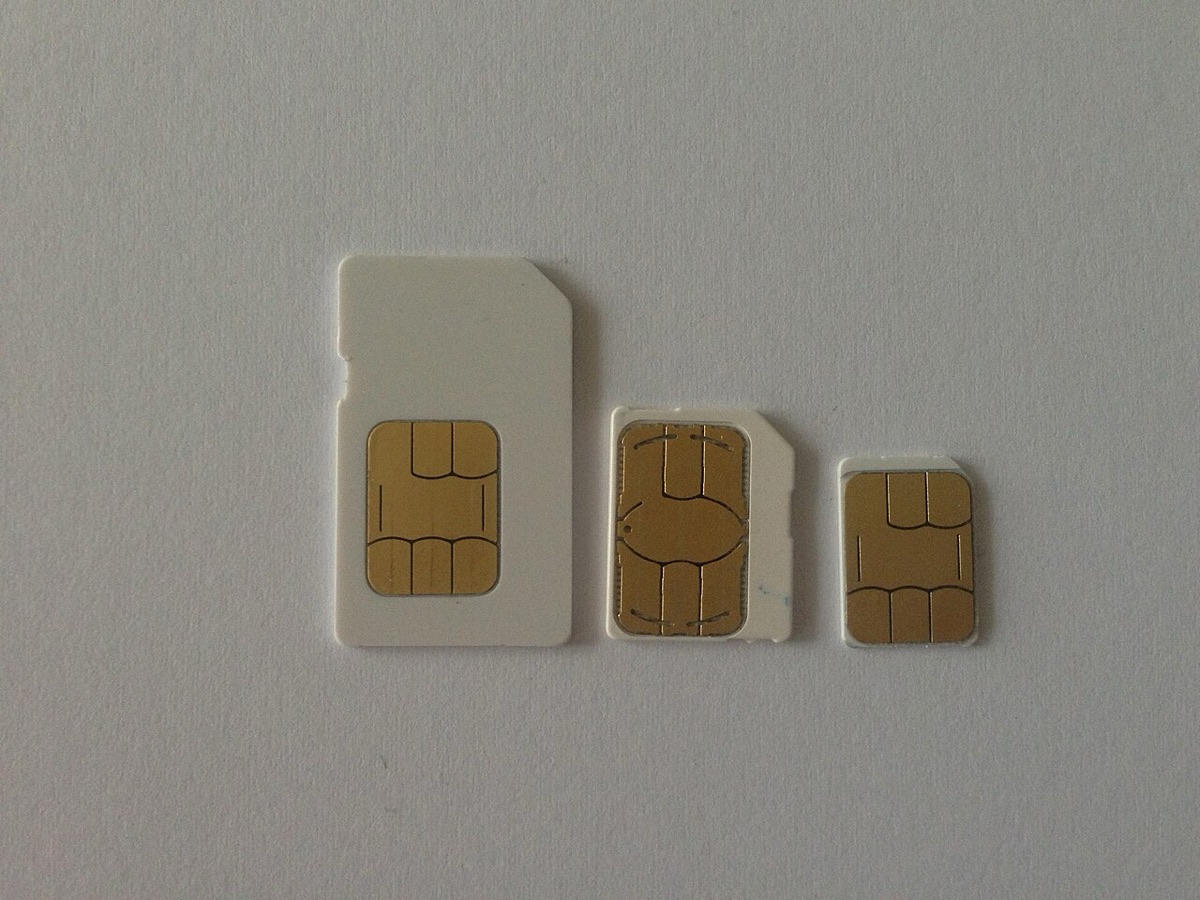

How an eSIM works, step by step
- You buy a plan. The provider's system reserves a profile on its SM-DP+ server (Subscription Manager Data Preparation) and generates a one-time activation code.
- You get a QR code. The QR code is just that activation code written out as text, in the format below. There is nothing else in it.
- Your phone scans it. A piece of system software called the LPA (Local Profile Assistant) reads the server address and matching ID from the code.
- The LPA contacts the server. Over Wi-Fi or any data connection, it authenticates to the SM-DP+, which checks the matching ID and the chip's certificate.
- The profile downloads, encrypted. It is decrypted inside the eUICC itself, never by the phone's operating system, and installed as a new line.
- You switch it on. The phone registers on the network with that profile, exactly as it would with a card in the tray. On a travel eSIM you do this at the arrival gate.
What an eSIM QR code actually contains
The protocol is the GSMA's SGP.22 consumer specification, maintained in v2.x and v3.x branches (v3.1 dated December 2023, a v2.7 published in 2026), with SGP.32 covering the IoT variant. You do not need to know any of it, but it explains two things travellers run into: why an eSIM needs an internet connection to install (the download) and why a QR code can only be used once (the matching ID is consumed). The same facts, with the manual-entry path for when a camera will not scan, are in what is an SM-DP+ address.
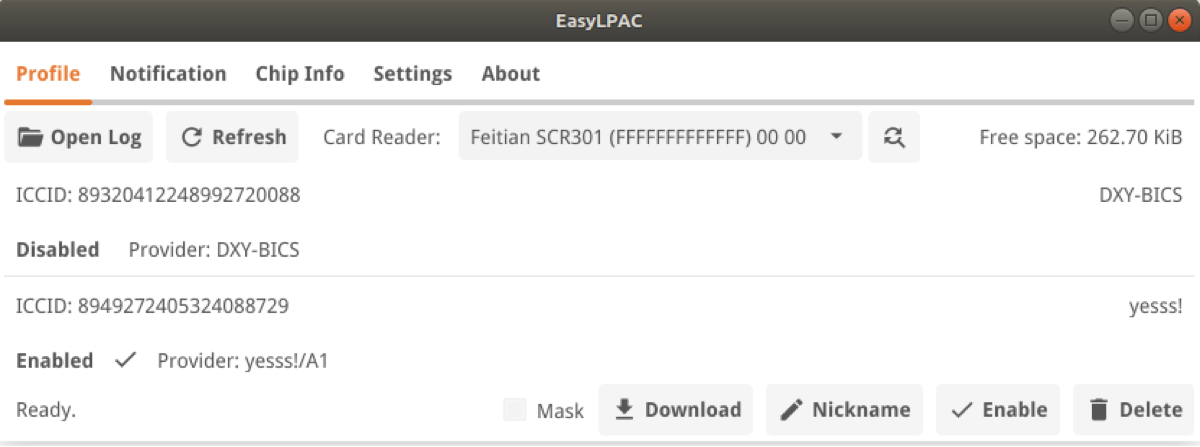

The three numbers on an eSIM phone
| Number | What it identifies | Length | Changes when |
|---|---|---|---|
| EID | The eSIM chip itself | 32 digits | Never |
| ICCID | One installed profile (one plan) | 19–20 digits | Every new eSIM or SIM |
| IMEI | The phone's radio, one per SIM slot | 15 digits | Never |
Which phones have an eSIM, and since when
| Milestone | Date | Source |
|---|---|---|
| Google Pixel 2: first phone built with an eSIM (Project Fi only at launch) | 4 Oct 2017 | |
| iPhone XS, XS Max and XR: nano-SIM plus eSIM, dual SIM via software update that autumn | Sept 2018 | Apple |
| Samsung Galaxy S20 family: Samsung's first phones with eSIM (availability varies by country and carrier) | Feb 2020 | Samsung |
| iPhone 14: SIM tray removed on US models; US iPhones eSIM-only from here on | Sept 2022 | Apple |
| iPhone Air: eSIM-only in every market; iPhone 17 eSIM-only in a dozen markets including Canada, Japan, Mexico, the UAE and Saudi Arabia | Sept 2025 | Apple |
| iPhone Duo: eSIM-only worldwide | Sept 2026 | Apple |
The fastest check for any phone is in is my phone eSIM compatible, and the model table is on compatible devices. One more thing a compatible phone needs: it must not be locked to a carrier, or the profile installs and then refuses to connect.
How big eSIM is in 2026
- 605 million eSIMs shipped in 2025, up 18% on the year, and consumer profile downloads grew 43%, per the Trusted Connectivity Alliance (March 2026). Its mid-2026 snapshot says the first half of 2026 nearly matched all of 2025.
- 5% of smartphone connections were eSIM at the end of 2025, forecast to reach 10% by the end of 2026 and 4.9 billion connections by 2030, when eSIM overtakes the removable SIM, per GSMA Intelligence.
- 60% of consumers know what an eSIM is, up from 25% in 2021; among travellers it is 71%, with 70% interested in a travel eSIM, from a GSMA Intelligence survey of 11 countries in August 2025.
- Travel eSIM revenue reached US$1.8 billion in 2025, up 85% from US$989 million in 2024, with Juniper Research forecasting US$8.7 billion by 2030 (October 2025).
How a travel eSIM works in practice
A travel eSIM is a prepaid data profile from a provider that has agreements with carriers in the destination. You buy it online, install it on home Wi-Fi, and keep it switched off until you land. At the gate you turn it on, set it as the data line, and leave the home SIM in the tray for calls, texts and the bank codes that still arrive by SMS. Your phone number does not change, because the number lives on the home SIM; the eSIM only carries data. That is the whole trick, and it is why WhatsApp and iMessage carry on as before.
Three questions come up every time, and each has its own page: which roaming toggle goes which way (travel eSIM on, home SIM off), whether the eSIM can be shared as a hotspot (yes), and how much data to buy (about a gigabyte a day for most people).
What an eSIM cannot do
- Install without internet. The profile is a download. Scan on Wi-Fi at home, not at the arrival gate with no connection.
- Be reused from the same QR code. The matching ID is consumed on first use. To put the plan on a second phone you need a transfer or a reissue from the provider.
- Beat a carrier lock. A locked phone rejects other carriers' profiles as firmly as it rejects their cards.
- Give you a local phone number by default. Most travel eSIMs are data-only; a few carry a number for calls. The distinction is in does an eSIM have a phone number.

FAQ
QWhat is an eSIM?
AAn eSIM (embedded SIM) is a SIM card that is soldered inside the phone as a small chip, about 6 by 5 millimetres, instead of being a removable plastic card. The GSMA, the industry body that wrote the standard, defines eSIM as a global specification that enables remote SIM provisioning of any mobile device. The chip is blank from the factory; a carrier profile, which is the actual subscription, is downloaded onto it over the internet, usually by scanning a QR code.
QHow does an eSIM work?
AWhen you scan an eSIM QR code, your phone reads an activation code that contains the address of a server called the SM-DP+ and a one-time matching ID. Software on the phone, the Local Profile Assistant, contacts that server over Wi-Fi or data, authenticates, downloads the encrypted carrier profile and installs it on the eSIM chip. From then on the phone behaves exactly as if that carrier's SIM were in the tray: it registers on the network, gets an IP address and uses data. Several profiles can be stored at once, but only one is active per eSIM slot.
QWhat is the difference between an eSIM and a physical SIM?
ABoth hold the same kind of carrier profile and connect to the same networks; the difference is delivery. A physical SIM is a removable card you buy and insert, and its profile is written at the factory. An eSIM is a chip fixed inside the phone, and its profile is written over the air, so you can buy and install a plan from your sofa before a trip, keep a home SIM and a travel eSIM active side by side, and switch between them in Settings. The practical cost is that you cannot move an eSIM to another phone by hand; you transfer or reinstall it.
QWhich phones have an eSIM?
AEvery iPhone from the XS and XR of September 2018 onward, with iPhone 14 and later sold eSIM-only in the US since September 2022 and the iPhone Air eSIM-only everywhere since September 2025. Google's Pixel 2 of October 2017 was the first phone with one. Samsung added eSIM with the Galaxy S20 in February 2020, with availability varying by country and carrier. Mainland-China models are the main exception: Apple lists only a handful of recent models with eSIM there. The quick test on any phone is to dial *#06# and look for a 32-digit EID.
QIs an eSIM better than a physical SIM for travel?
AFor most travellers, yes, because of timing. A travel eSIM is bought and installed on home Wi-Fi before departure and switched on at the arrival gate, while a local physical SIM means a kiosk, a passport check and a queue after a long flight. The home SIM stays in the tray for calls, texts and bank codes, and the eSIM carries data. A physical SIM still wins when the phone is carrier-locked or has no eSIM chip, or for stays of many months where a local contract is cheaper.
QCan I have more than one eSIM?
AYes. The GSMA specification allows multiple operator profiles to be stored on one eSIM chip and switched between remotely, though only one can be used at a time per slot. Apple says recent iPhones can store eight or more eSIMs and use two at once; Pixel and Galaxy phones store several and run one eSIM alongside the physical SIM. Each profile has its own ICCID; the chip itself keeps one permanent EID.
Related guides
- What is an SM-DP+ address?
- What is an EID number?
- IMEI vs EID vs ICCID
- What is an ICCID number?
- Is my phone eSIM compatible?
- Does an eSIM have a phone number?
- Is my phone carrier-locked?
- eSIM compatible devices (full list)
- How much data do I need for travel?
- How to check data usage on iPhone and Android
- Can you hotspot a travel eSIM?
- What does airplane mode do?
- eSIM setup on iPhone and Android
- How to activate an eSIM on iPhone
- How to activate an eSIM on Android
- Data roaming on or off?
Originally published on www.yonosim.com/en/blog/what-is-an-esim-how-does-it-work-2026 · YonoSIM — You Only Need One SIM